
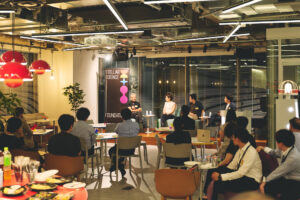
On July 23, 2026, SS-F hosted “SS-F Beacon Nights at Lighthouse Lab: Flow Cytometry & the Future of Single-Cell Science Sponsored by Waters Biosciences (formerly BD Biosciences)”.
SS-F Beacon Nights brings together researchers, technology developers, industry professionals, and others from diverse backgrounds to explore the future of science through conversations around emerging technologies and ideas.
This edition focused on the theme “Flow Cytometry & the Future of Single-Cell Science.”
From the history of flow cytometry to the possibilities emerging from new measurement technologies, the event explored one central question: How can new ways of measuring biology inspire new scientific questions?
The evening began with a presentation by Robert Balderas, Vice President of Waters Biosciences, followed by a panel discussion moderated by Takanori Takebe, Founder and Representative Director of SS-F, featuring Professor Ayuko Hoshino and Professor Hideaki Kato of the Research Center for Advanced Science and Technology, The University of Tokyo, alongside Robert Balderas.
The program then continued with a presentation by Hiroyuki Kayo, Technical Application Manager and specialist in flow cytometry and single-cell analysis, on the technology behind the BD FACSDiscover™ S8. Participants then took part in small-group demonstrations and informal networking.
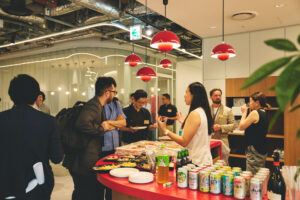
With pizza and drinks shared throughout the evening, the event created a relaxed environment where conversations about science and technology could continue naturally beyond the formal sessions.
The Impact of Seeing What Was Previously Invisible
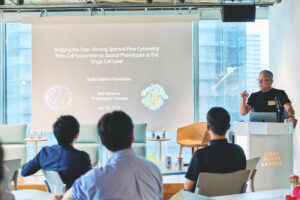
The first presentation by Robert Balderas explored the history of flow cytometry and how advances in measurement technology have transformed biological research.
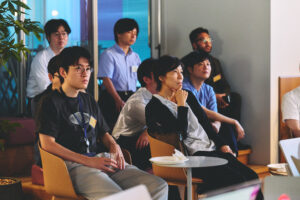
As researchers gained the ability to distinguish, separate, and visualize different cell populations, flow cytometry opened up possibilities that had previously been out of reach.
Balderas reflected on early FACS data and the impact these new capabilities had on scientists at the time.
The significance was not simply that researchers could collect more data. When something that was previously invisible becomes visible, it can change the questions researchers are able to ask in the first place.
The history of flow cytometry is, in many ways, a history of how new ways of seeing can lead to new science.
What New Questions Can New Technologies Inspire?
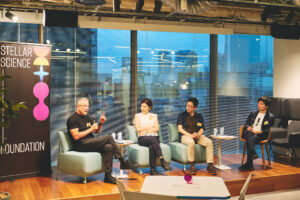
The presentation was followed by a panel discussion moderated by Takanori Takebe, Founder and Representative Director of SS-F, featuring Professor Ayuko Hoshino and Professor Hideaki Kato of the Research Center for Advanced Science and Technology, The University of Tokyo, alongside by Robert Balderas, Vice President of Waters Biosciences.
Under the theme “Flow Cytometry & the Future of Single-Cell Science,” the panel brought together perspectives from both researchers and technology developers.
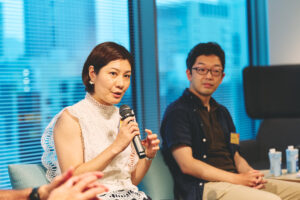
Hoshino and Kato shared their perspectives on the scientific challenges they encounter in their research, including questions they would like to explore as measurement technologies continue to advance.
The discussion also explored how limitations in measurement can shape the direction of research and what might become possible when those limitations are removed.
From the technology development perspective, Balderas discussed the relationship between scientific needs and technological innovation, including how questions and requests from researchers can help drive the development of new tools.
The panel highlighted the ongoing relationship between scientific questions and technological innovation, and how each can influence the other.
A New Way of Looking at Cells with the BD FACSDiscover™ S8
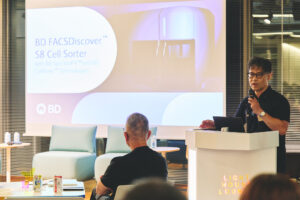
The next session featured a presentation by Hiroyuki Kayo, Technical Application Manager and specialist in flow cytometry and single-cell analysis, on the technology behind the BD FACSDiscover™ S8.
One of the key capabilities introduced was full-spectrum analysis, which allows researchers to make use of a broader range of spectral information when identifying and analyzing cells.
The presentation also explored the instrument’s imaging capabilities, providing a visual perspective on how cells can be captured and analyzed alongside their other measured characteristics.
By connecting the technology to real examples and applications, the session brought the earlier discussion about what becomes possible when we can see biology differently into a more tangible context.
Exploring the Technology Together
The event then moved into small-group demonstrations of the BD FACSDiscover™ S8, giving participants an opportunity to see the technology in action and ask questions directly.
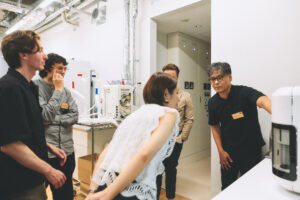
Participants gathered around the instrument as Kayo walked them through its capabilities, with discussions focusing on the data, imaging, spectral analysis, and potential applications in their own research.

The demonstrations continued alongside an informal networking session, with pizza and drinks providing a relaxed setting for further conversation. Researchers, industry professionals, and technology developers exchanged ideas about the technology and its potential applications, building on the discussions from the earlier sessions.
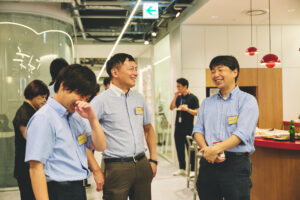
Rather than ending with the formal presentations, the evening continued through these smaller, more informal conversations. Participants had time to discuss the technology in greater detail and connect with others working across different areas of science.
Looking Ahead
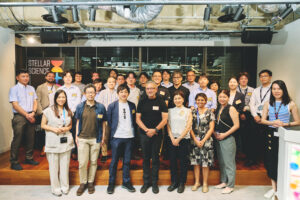
The discussions throughout SS-F Beacon Nights highlighted how advances in measurement technology can expand the possibilities of single-cell research.
From the history of flow cytometry to the latest capabilities of the BD FACSDiscover™ S8, the event brought together perspectives from technology developers and researchers to consider both what current technologies can achieve and what researchers may be able to explore next.
SS-F will continue to host events at Lighthouse Lab that bring researchers, technology developers, and industry together around emerging areas of science and technology.
