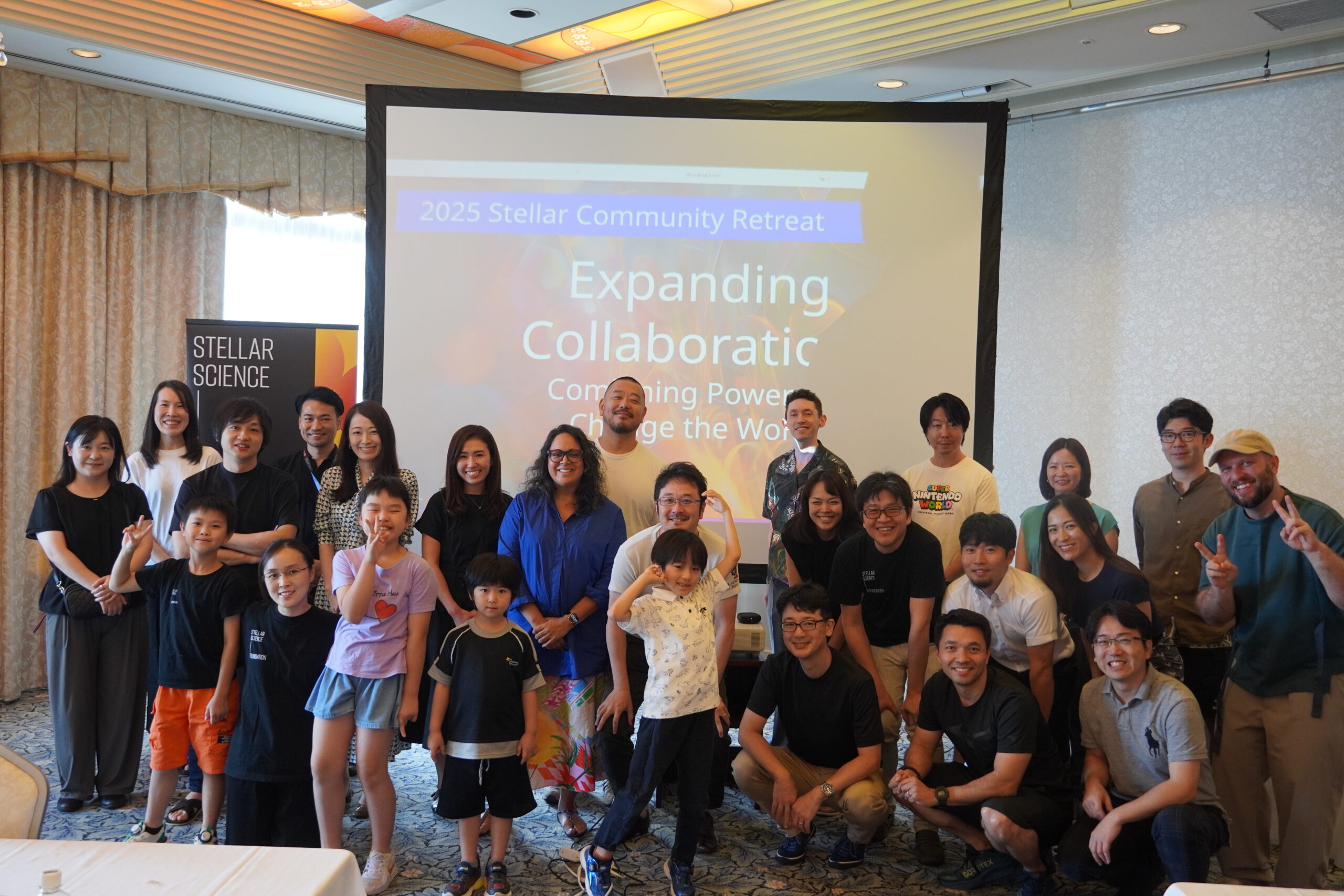
Two days on the stunning cliffs of Atami, exploring the origins of curiosity and envisioning the future of collaboration.
Every year, the STELLAR SCIENCE FOUNDATION (SS-F) hosts its annual Retreat with the aim of strengthening connections within the Stellar Inventors(※)community. This year, about twenty Inventors and their families gathered in Atami, with the deep blue ocean stretching out before them.
The theme of the 2025 SS-F Retreat was Collaboration.
Groundbreaking discoveries and inventions cannot be achieved without cooperation that transcends organizations and disciplines. Yet in reality, systems, cultures, and even interpersonal dynamics can become barriers that make true collaboration difficult. Against this backdrop, the retreat asked a central question: “What does ideal collaboration look like?” Over the course of two days, participants explored this theme through three timeframes — Then, Now, and Future.
(※)Researchers with unparalleled perspectives and imagination who take on ambitious scientific challenges are called “Stellar Inventors” by SS-F.
Day 1: Revisiting Collaboration Through Past and Present
Lightning Science Talks
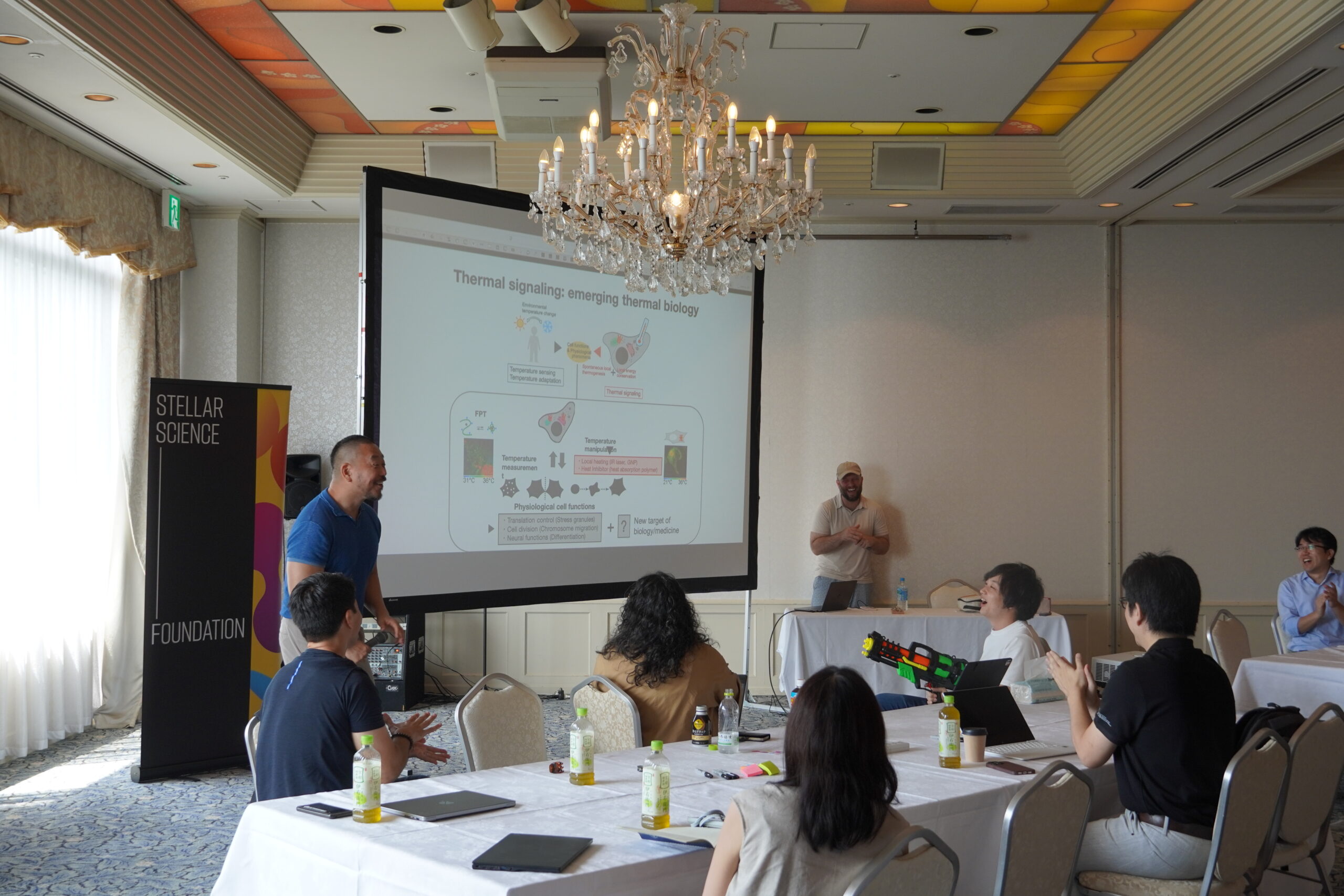
The retreat opened with the “Lightning Science Talks” — a session where each researcher had just 120 seconds to introduce their work. In this rapid-fire format, participants could quickly grasp one another’s areas of expertise, making it the perfect high-speed self-introduction.
But the 120 seconds weren’t just an arbitrary time limit. Dr. Takebe, who sat in the front row armed with a water gun, gave anyone who went over their time a playful yet merciless spray of water. Under this mix of humor and pressure, the Inventors enthusiastically presented their research.
When asked, “What are you most looking forward to at the retreat?,” many participants gave the same answer: “The chance to talk with researchers I wouldn’t meet under normal circumstances.” True to those words, this year’s retreat once again brought together Inventors from a wide spectrum of fields and backgrounds — from evolutionary biology to IoT, from molecular biology to engineering — all gathered under one roof.
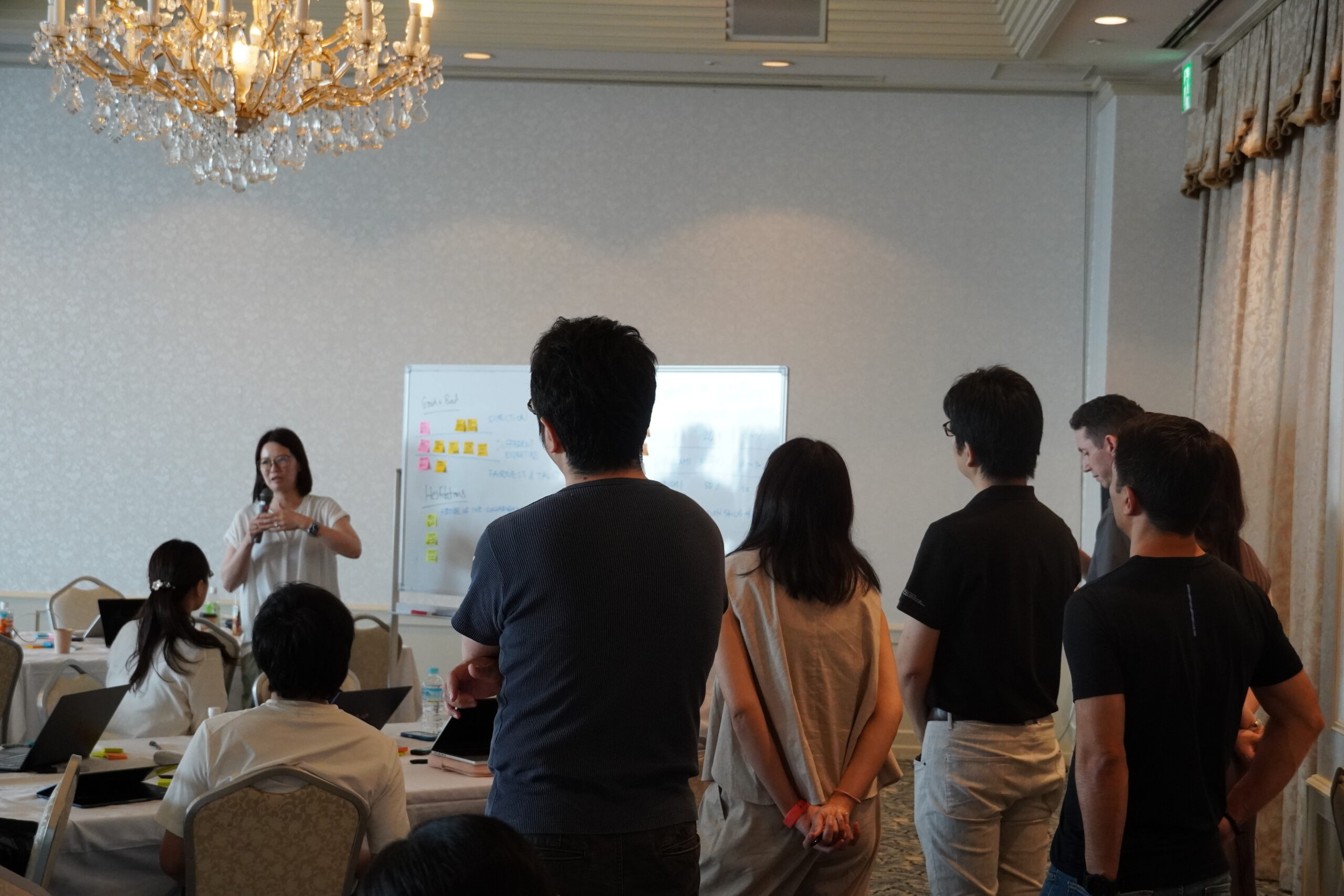
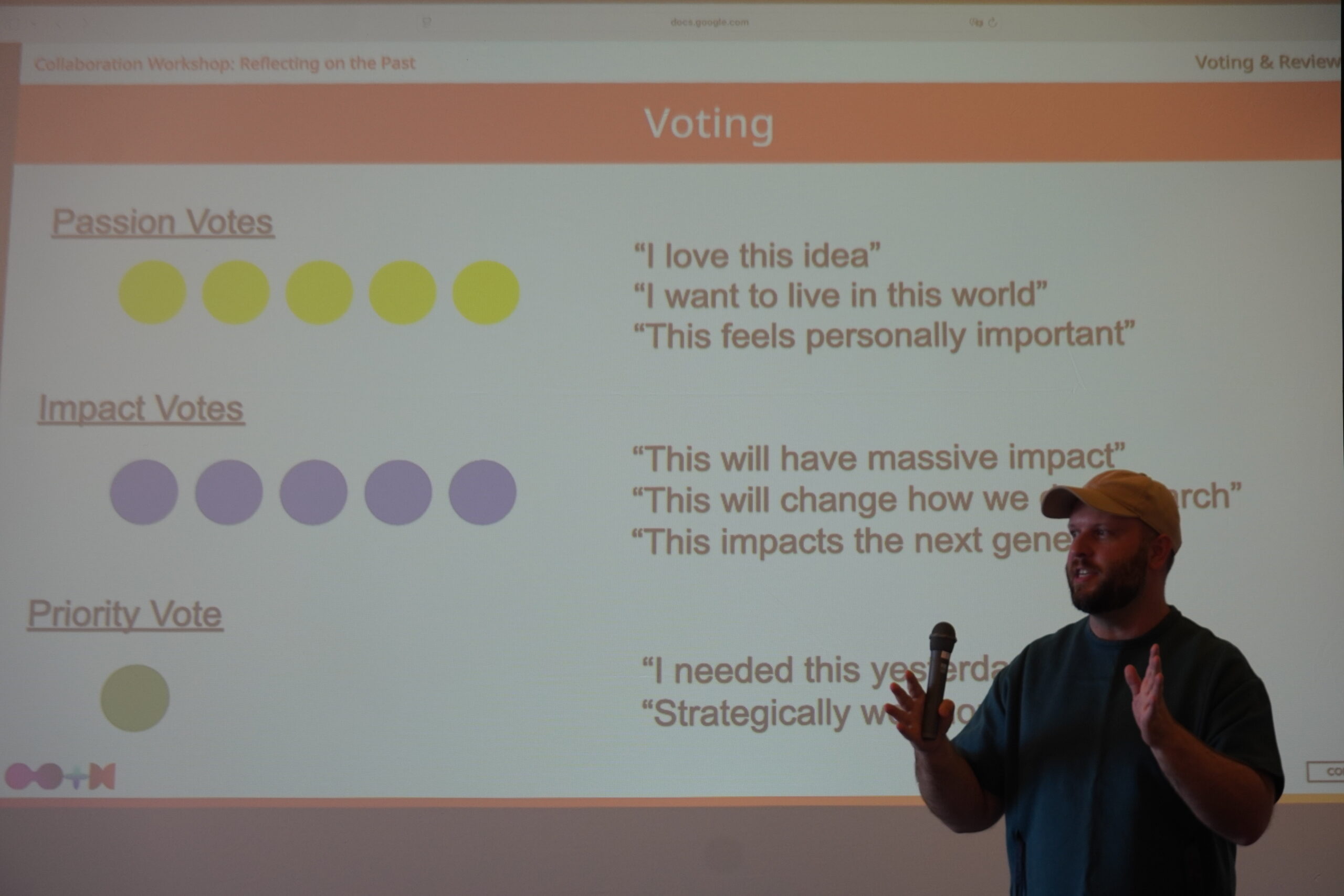
Collaboration Workshop Part 1 – “Then”
After self-introductions, the first session invited participants to look back on their past experiences of collaboration — such as joint research projects — in small groups.
They reflected on questions like:
- What factors led a collaboration to succeed?
- Why did some projects stall or fall apart along the way?
- How did the size or influence of a partner lab affect the relationship?
Each group shared their personal experiences and insights, surfacing both the challenges and the conditions that enable collaboration to flourish.
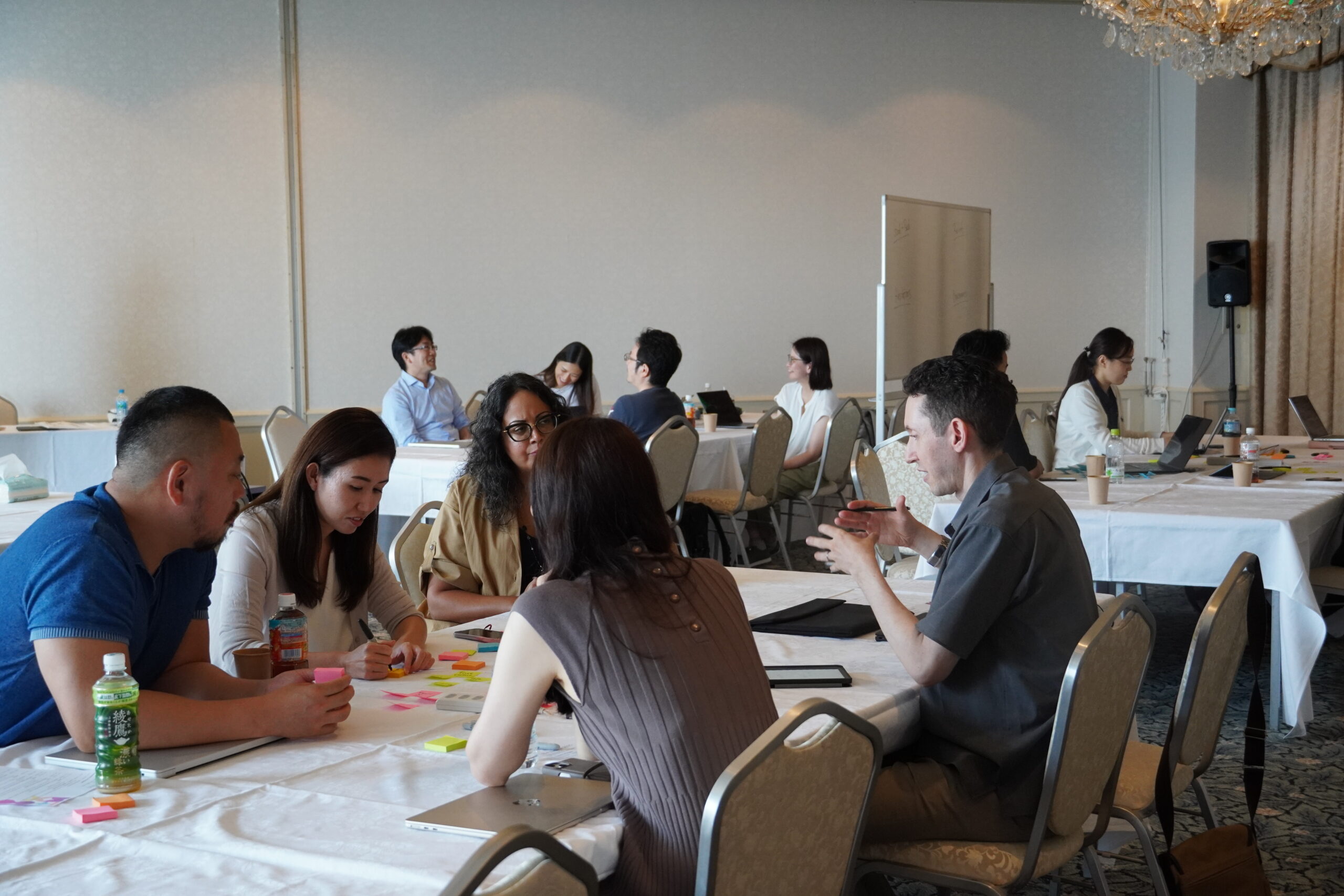
Although each episode carried its own unique circumstances, what emerged from the discussions were strikingly common challenges and lessons.
On the side of success factors, participants repeatedly emphasized the importance of building trust and clarifying commitments. Many noted how crucial it is to feel that “we are working on the same timeline,” and to have a clear sense of balanced contributions when it comes to sharing results — whether in publications or presentations.
Conversely, when it came to reasons for failure, differences in lab size and power dynamics surfaced again and again. While collaboration with larger labs offers advantages like enhanced resources, it can also create imbalances in authorship, decision-making, and control. For younger researchers in particular, this can become a daunting obstacle.
Another recurring theme was that many collaborations originate as bottom-up initiatives from students or early-career researchers, but ultimately hinge on the perspective and negotiating power of the PI (Principal Investigator). When a lab’s commitment or focus is unclear, projects often stall despite the enthusiasm at their inception.
“Collaboration should be win–win. But figuring out how to actually build that kind of relationship is always a challenge.”
“Working with a big lab can make it easier to produce results, but the power imbalance sometimes makes me hesitate.”
These candid reflections reassured participants that their struggles were not theirs alone. At the same time, they laid a shared foundation for imagining what more equitable and effective collaboration could look like.
Curiosity Unfolded: ART × Science through the Foldscope Workshop
After lunch, participants left the conference room and headed outdoors for a special workshop that invited both movement and discovery: a field activity using the Foldscope.
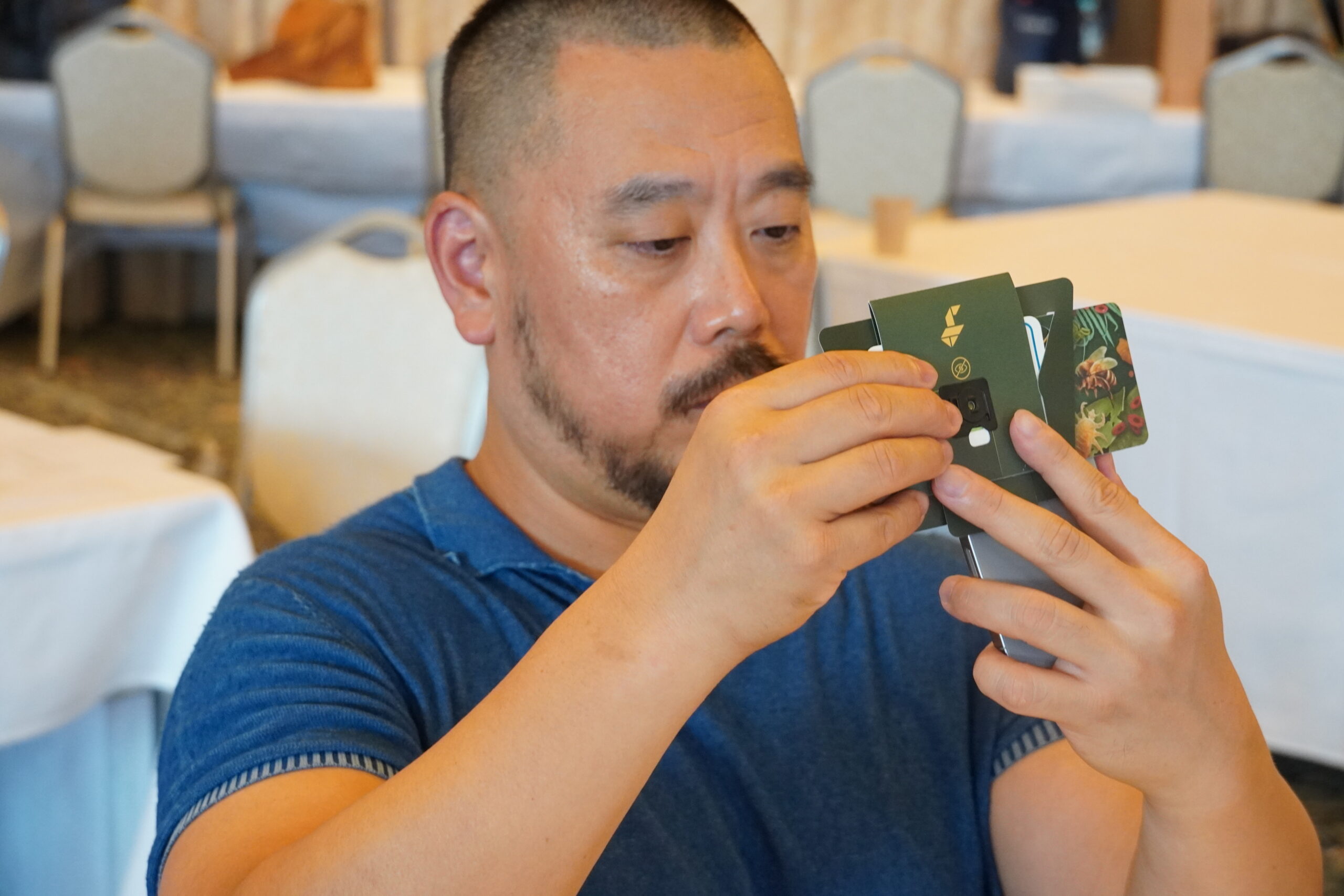
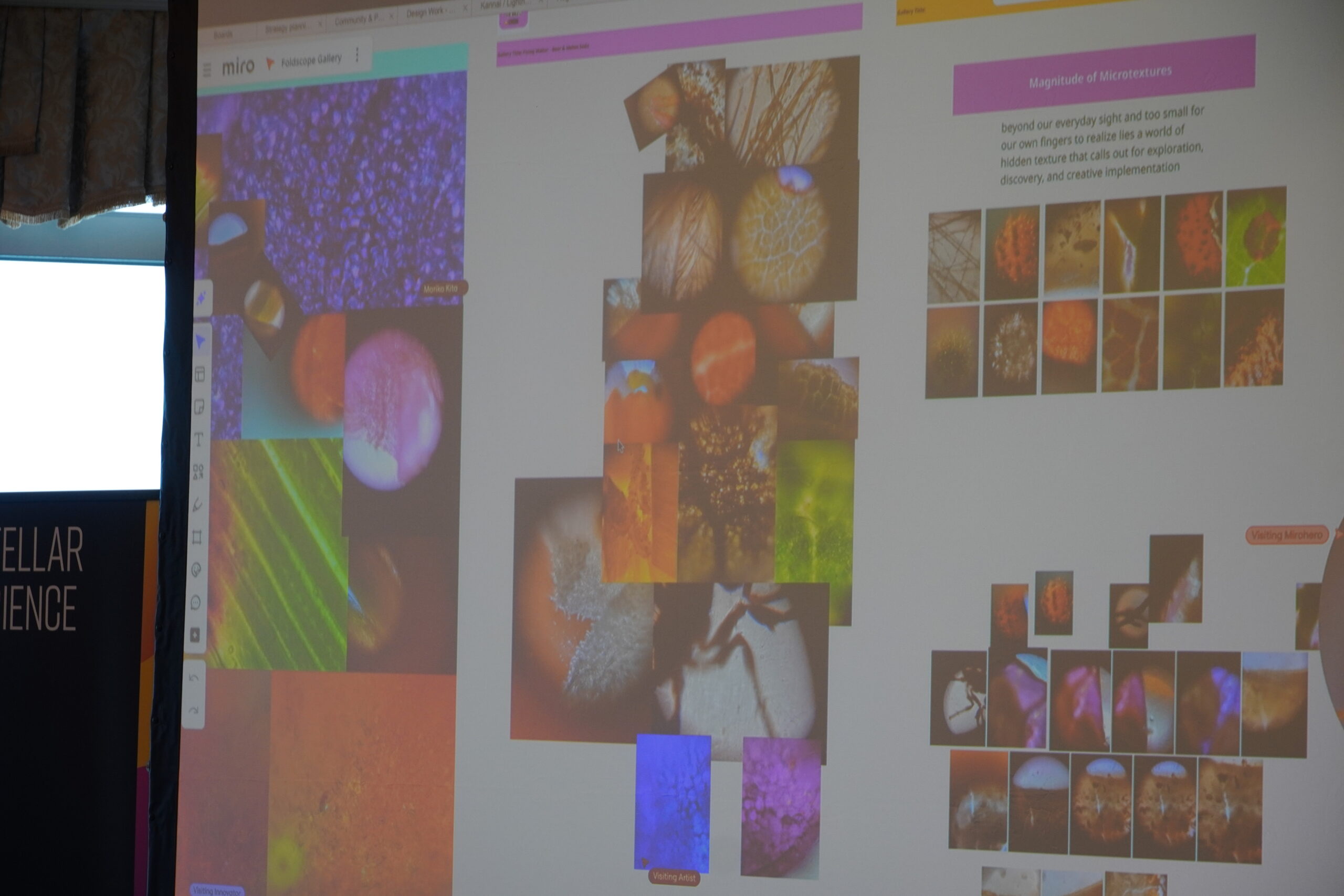
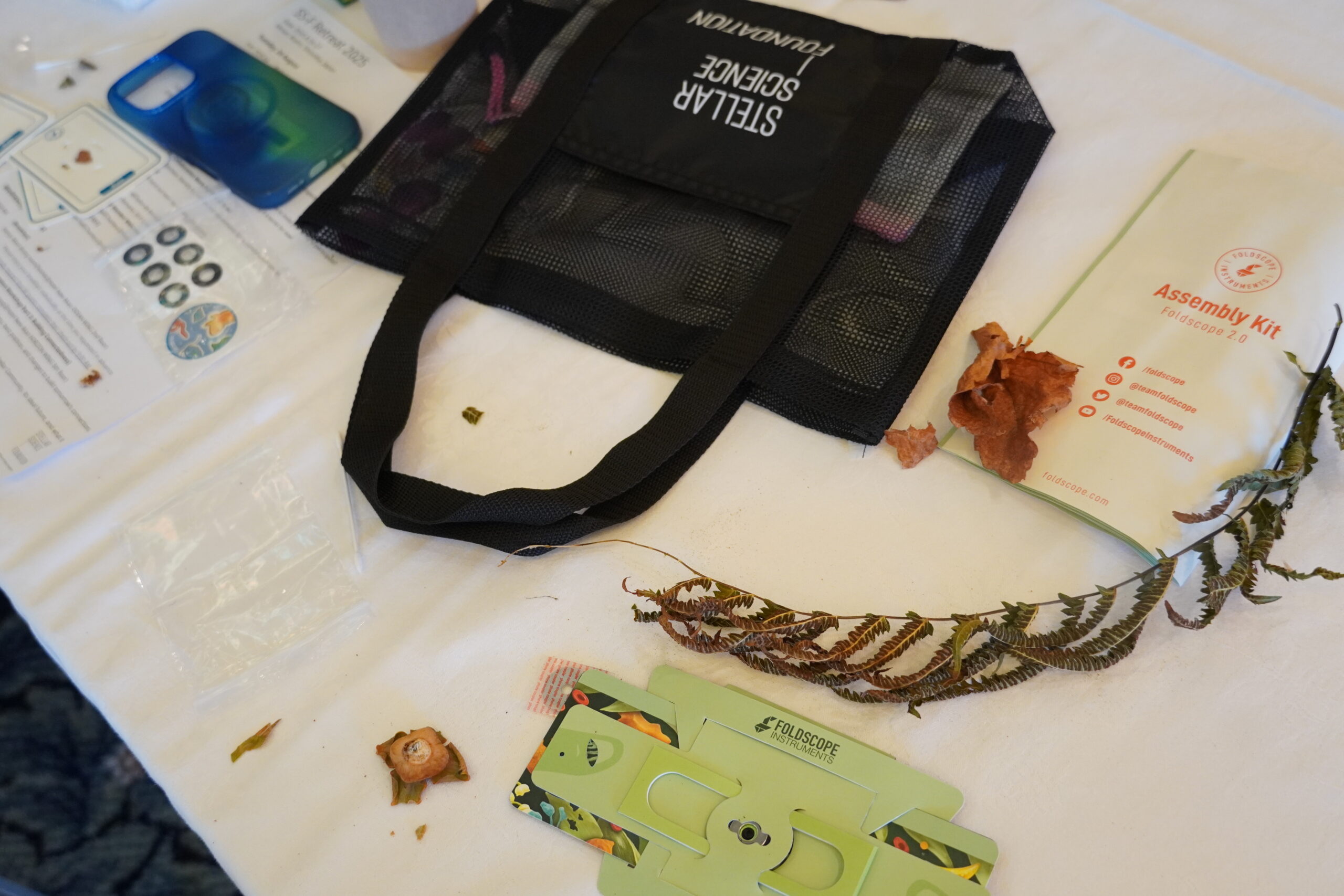
The Foldscope is a paper microscope, designed to be assembled like origami. Compact yet powerful, it allows anyone, anywhere, at any time to observe the microscopic world. This powerful device has made a significant impact in education and citizen science around the globe.
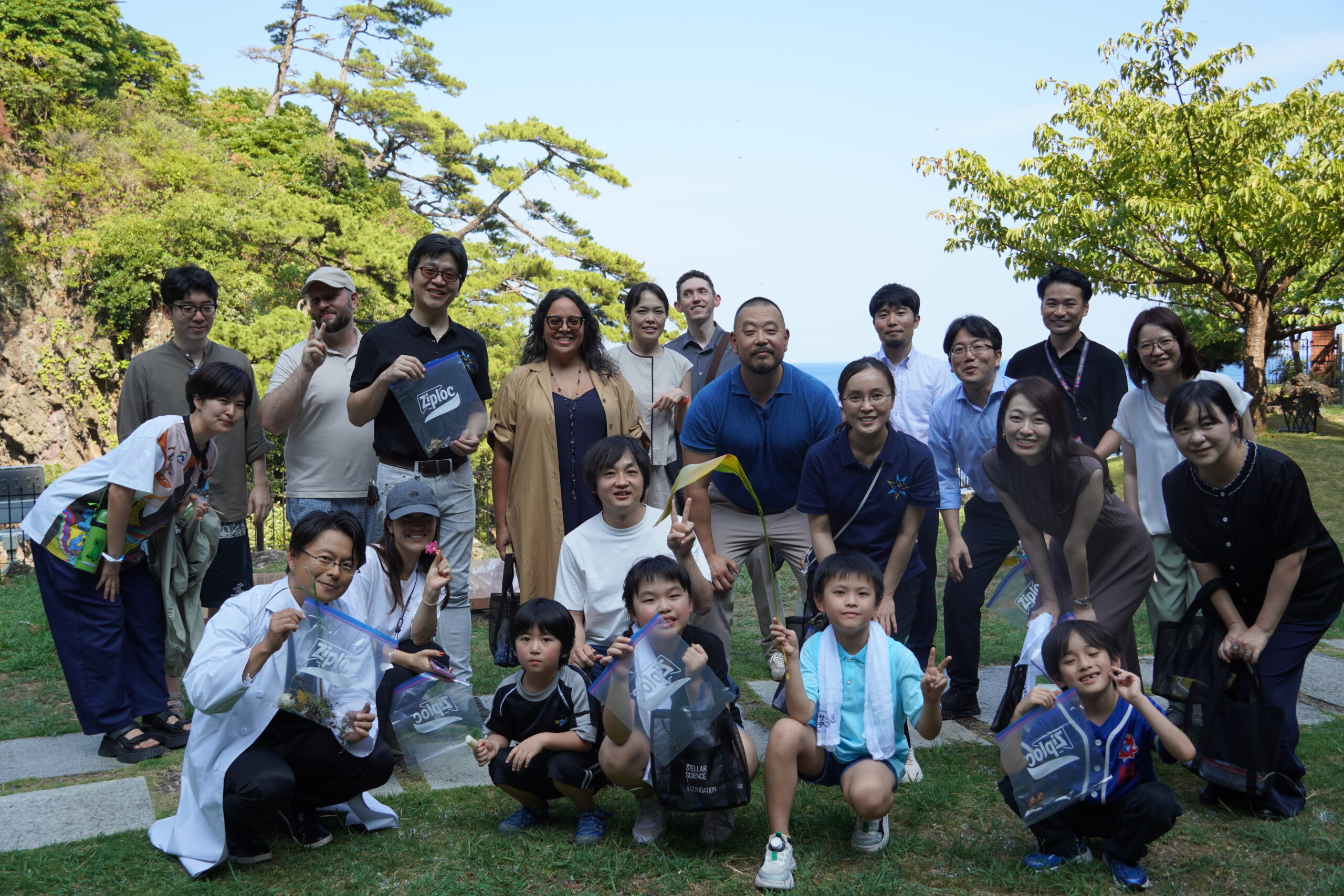
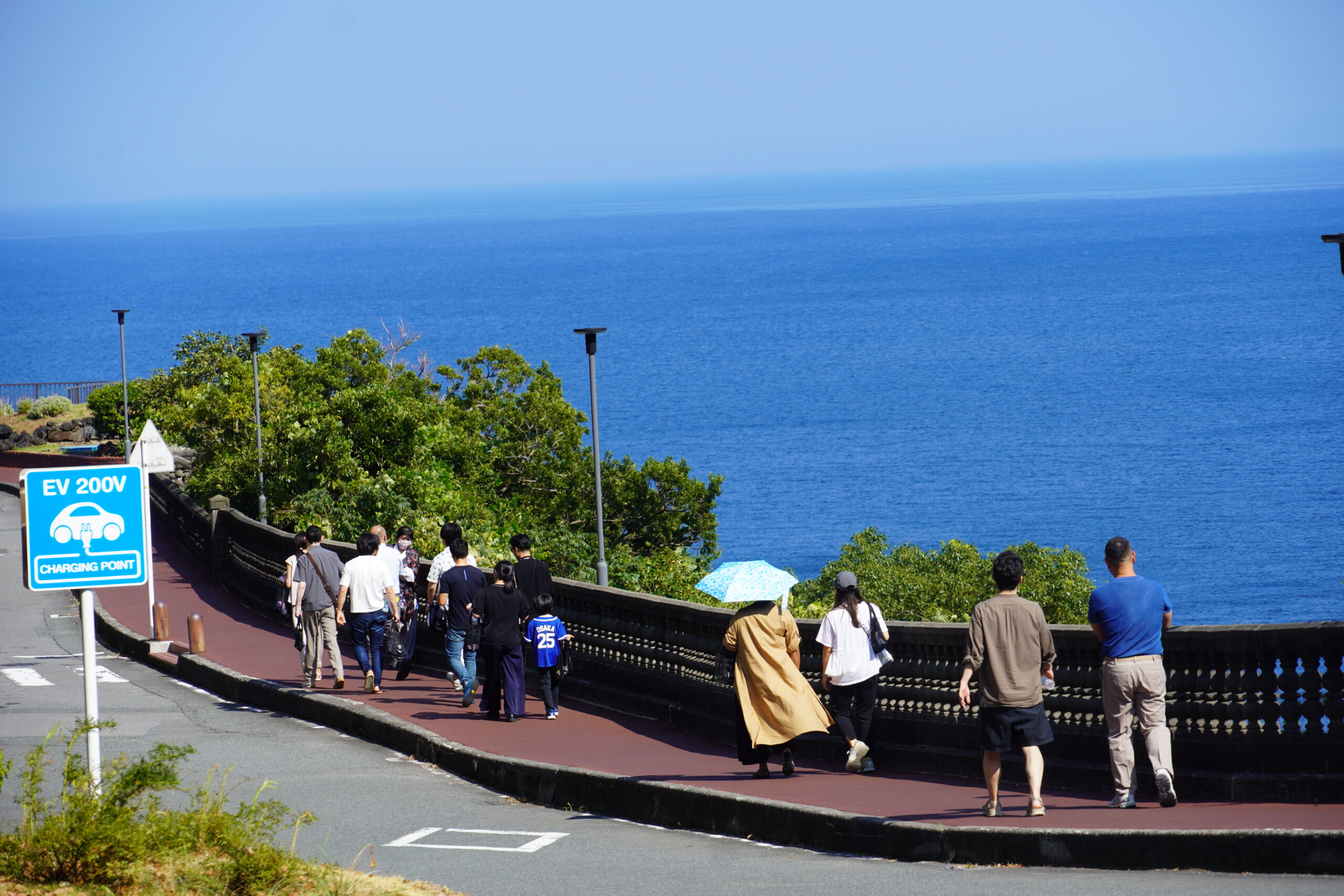
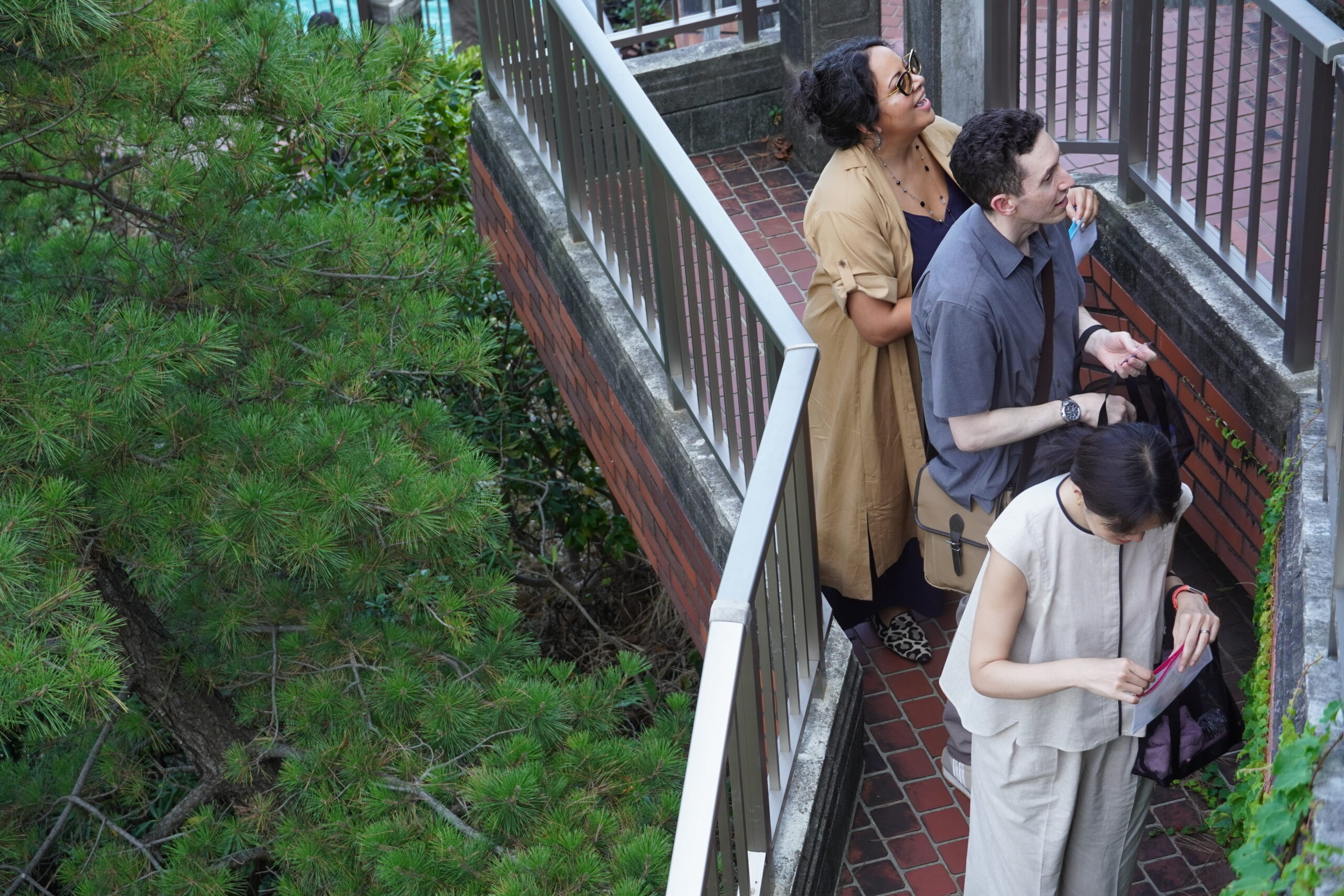
Equipped with this simple but powerful tool, the group set out to collect specimens. Descending through Atami’s mountain forest and along a cliffside path overlooking the ocean, children and adults alike gathered leaves, tiny blossoms, and insect shells. To everyone’s surprise, the samples soon expanded to include cigarette butts—and even a live dragonfly (!). Each new find sparked a wave of excitement, as curiosity spread contagiously through the group.
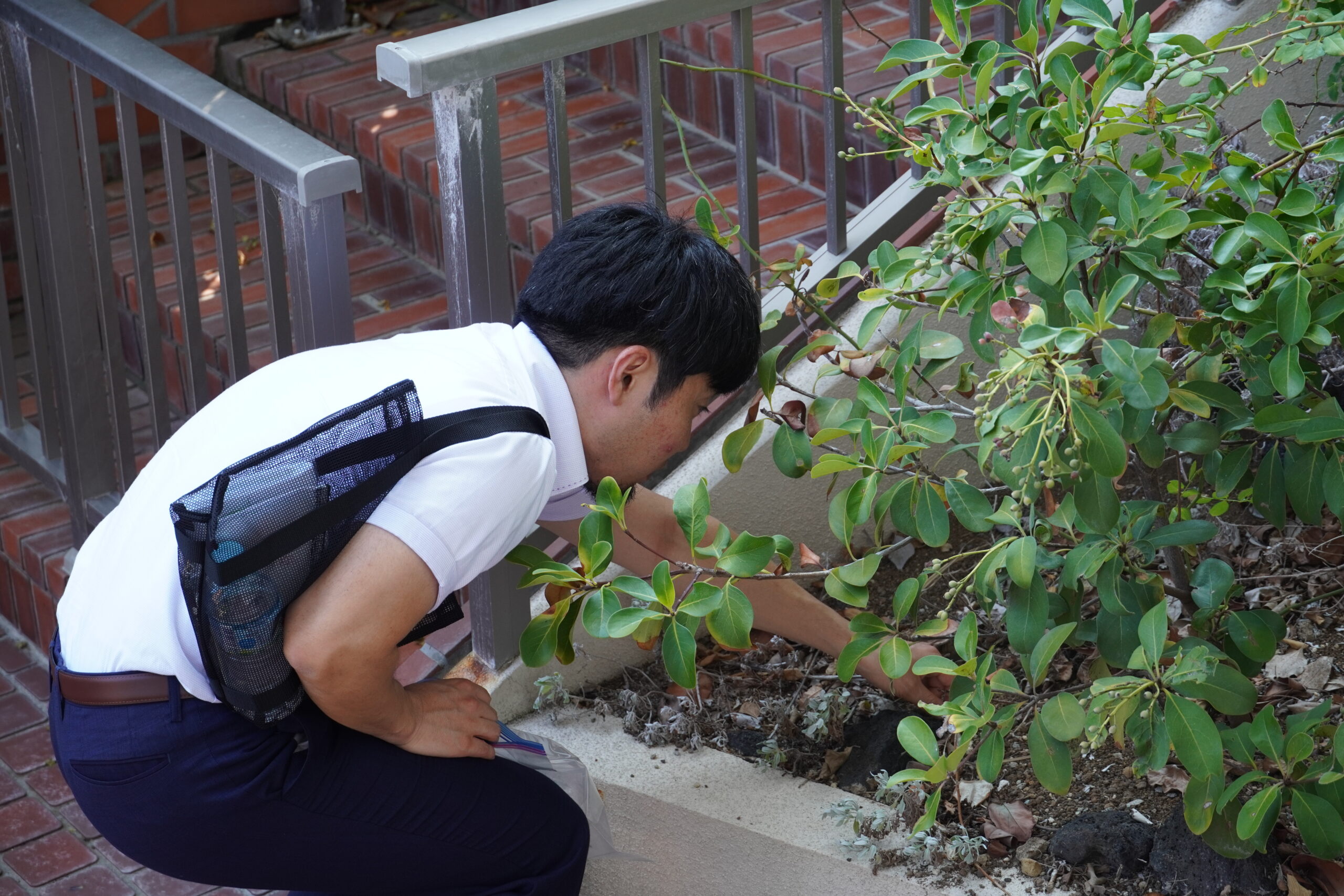
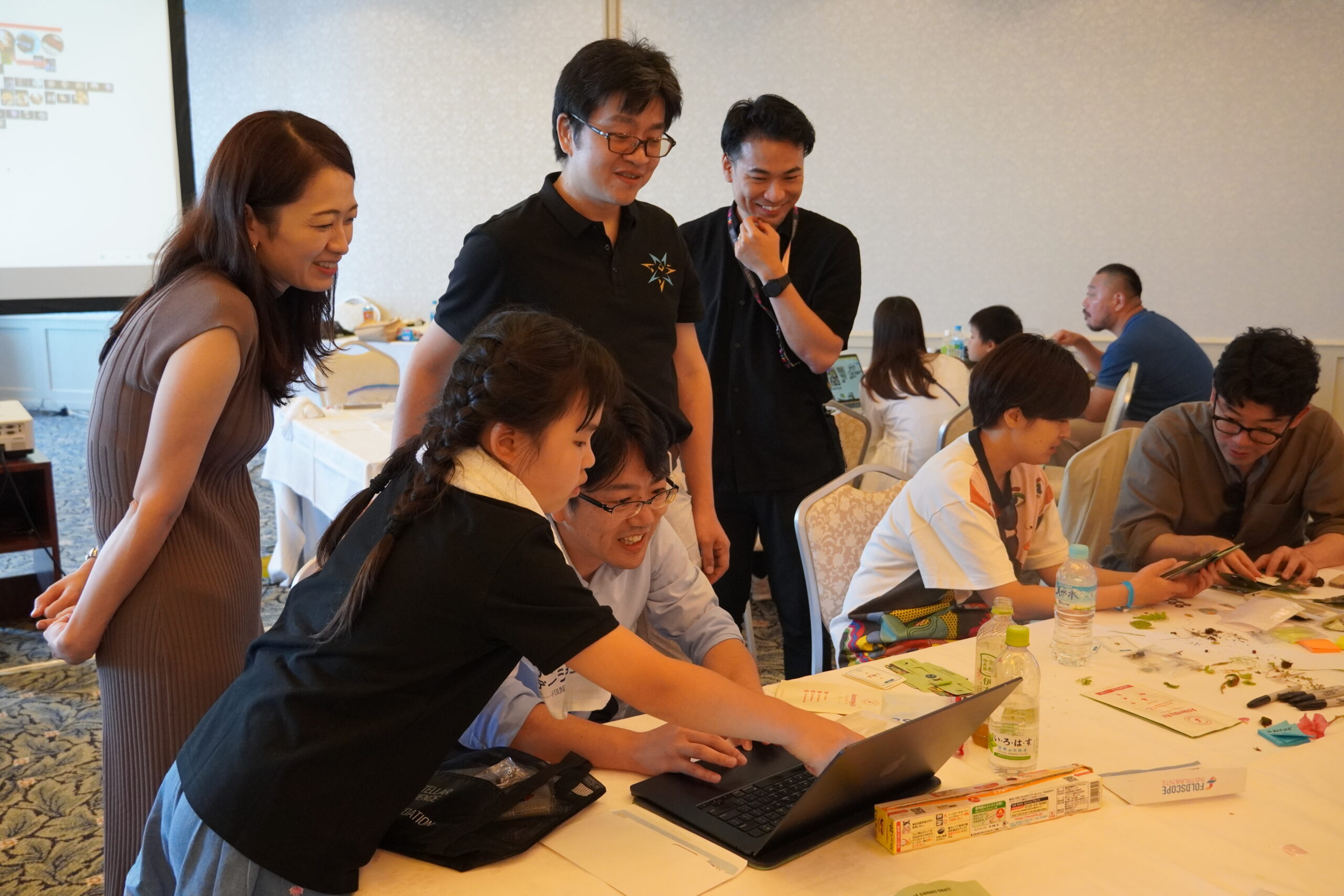
Back in the conference room, participants unfolded their Foldscopes and began observing their samples. The moment the microscopic world came into focus, the room filled with exclamations of “Look at that!” and “Wow!”. Both adults and children were instantly captivated, peering eagerly into their tiny lenses.
Even when looking at the very same leaf, the results differed depending on how it was cut or the angle of observation. Each participant, through their own perspective, uncovered a distinct and personal discovery.
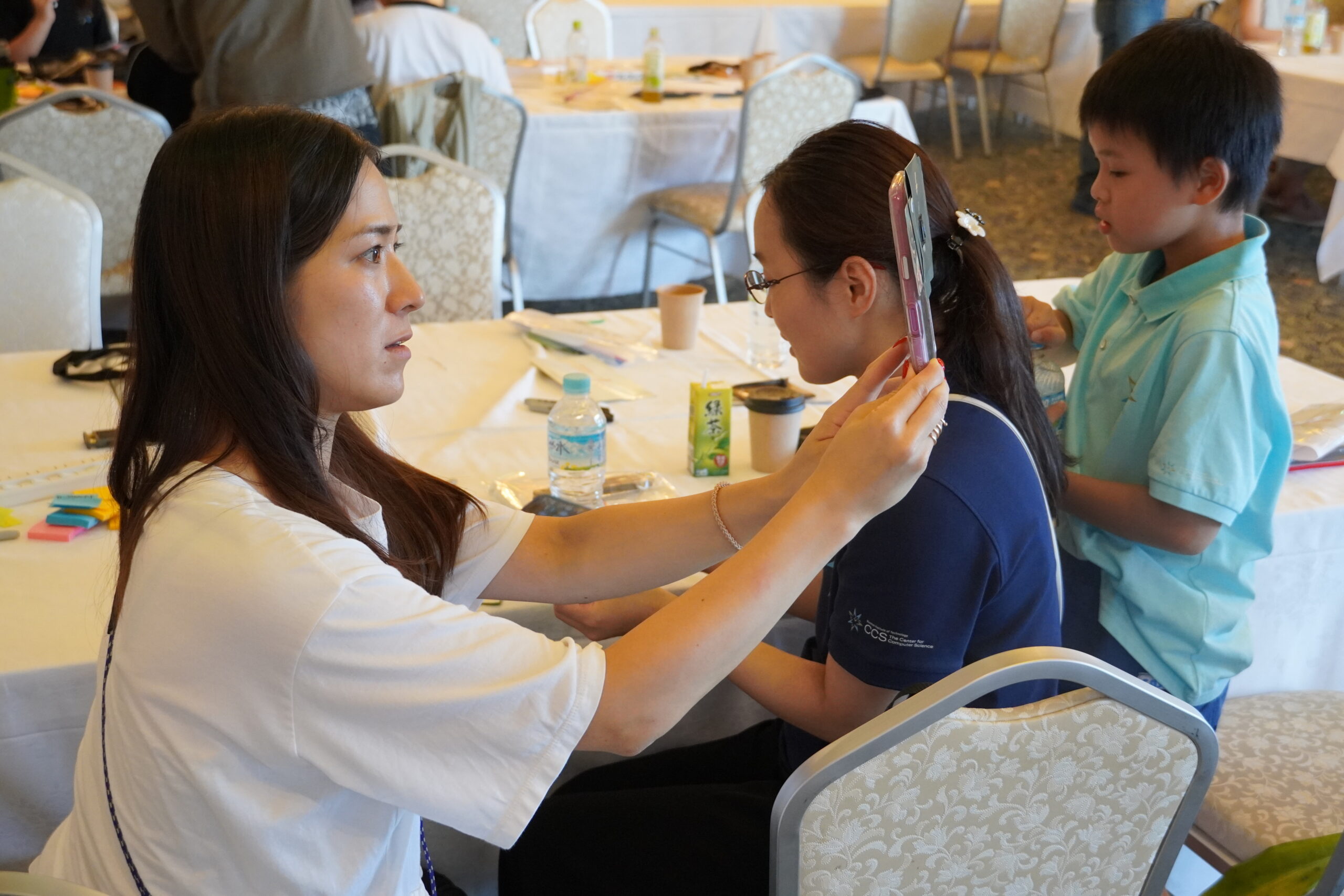
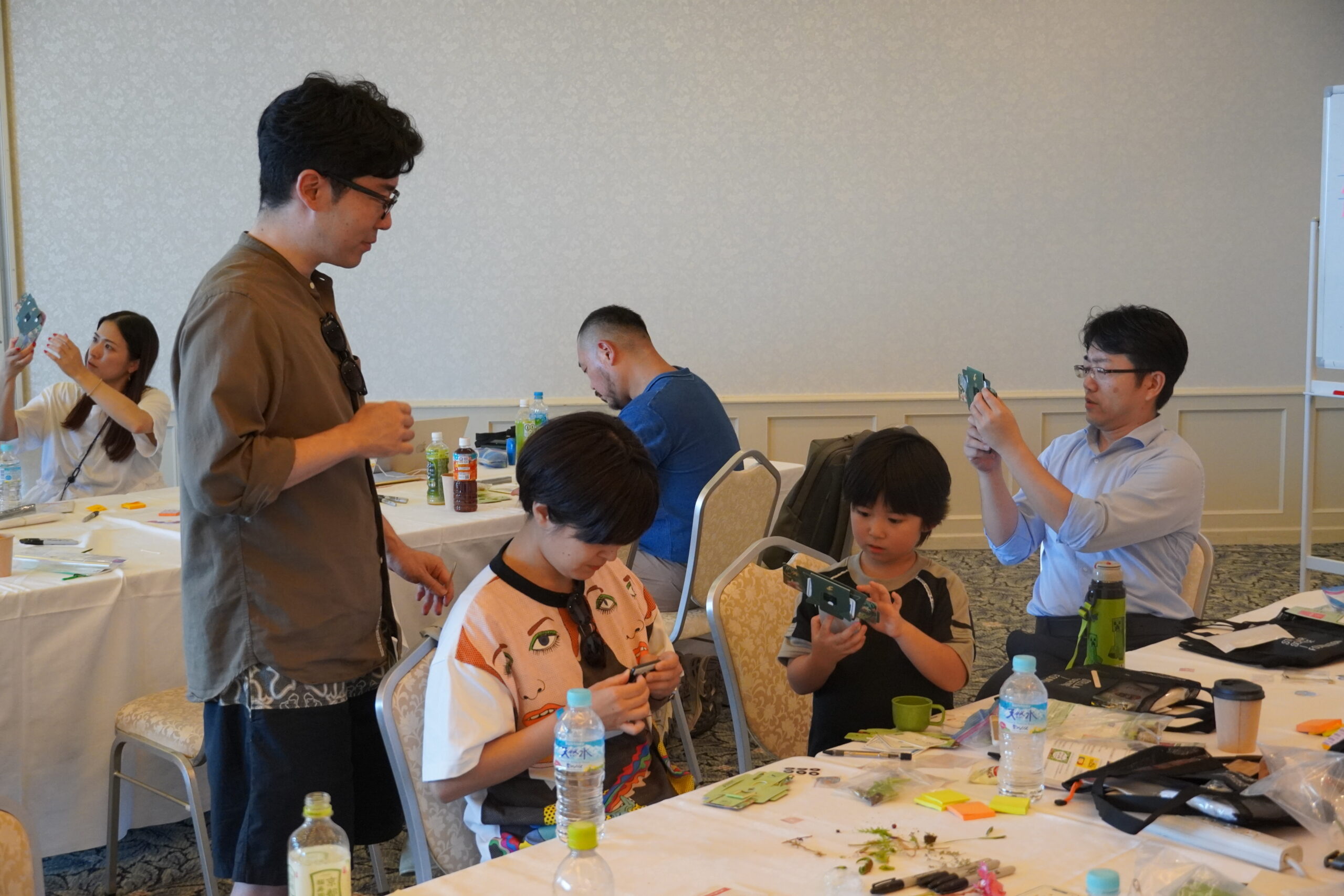
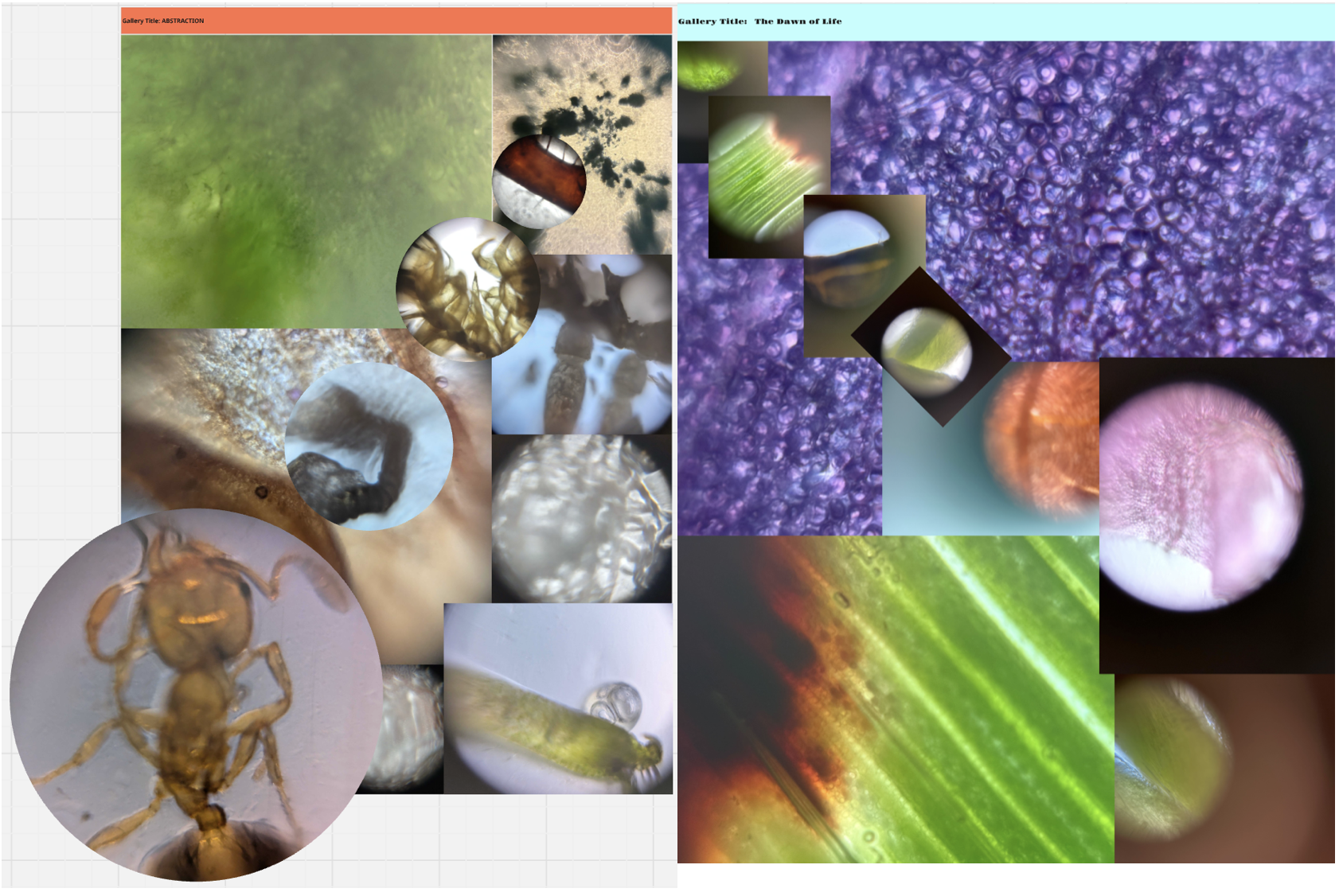
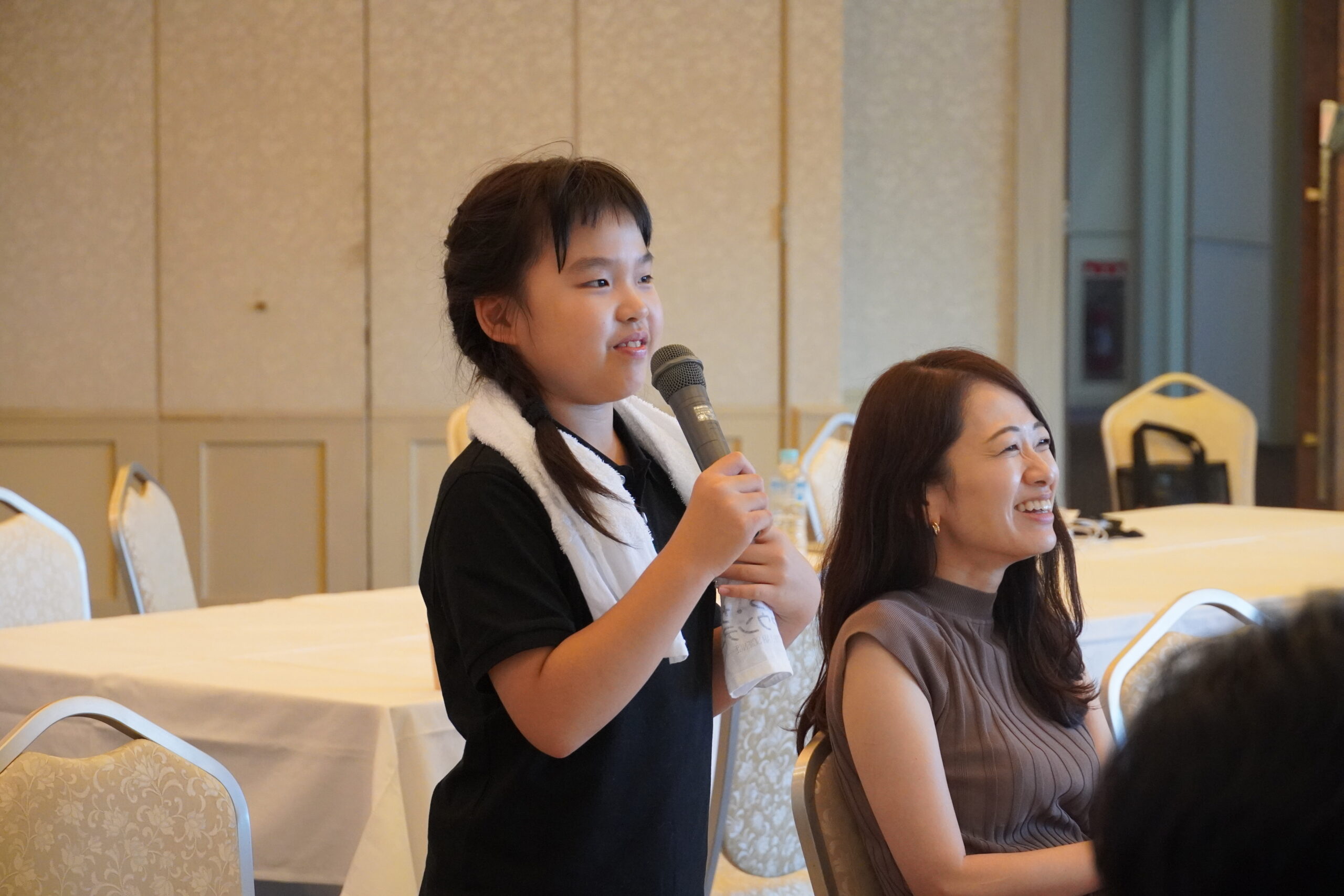
Finally, each group transformed their observed samples into works of art, presenting them with a theme and a story. The results ranged from grand concepts like “The Birth of Life” or “The Universe” to whimsical creations such as “A Praying Mantis Waiter Serving Melon Soda and Beer”—a uniquely imaginative piece inspired by a child’s perspective.
The presentations went far beyond scientific observation, becoming a shared experience of how the same object can be seen in completely different ways depending on who is looking.
Collaboration Workshop Part 2 – “Now”
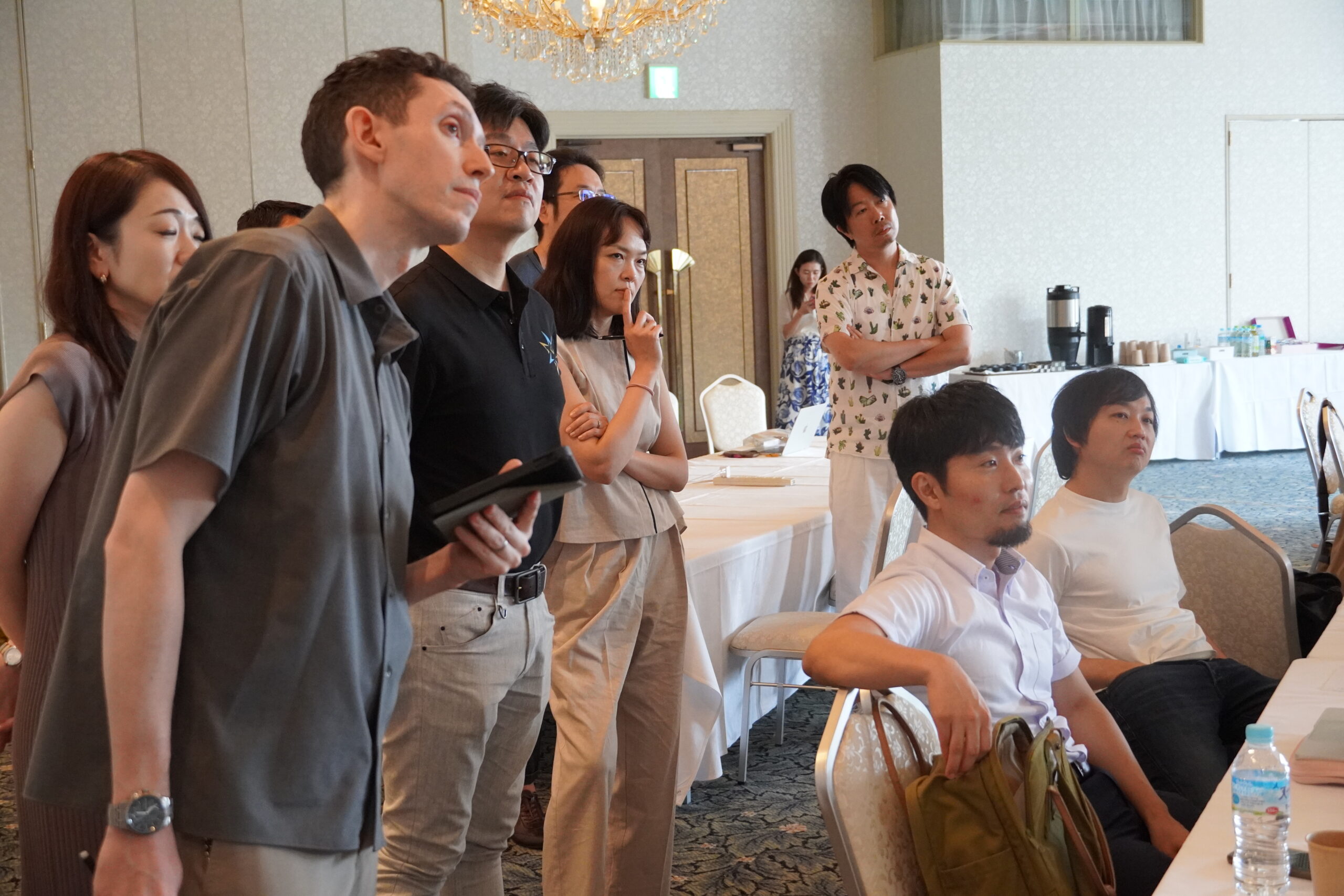
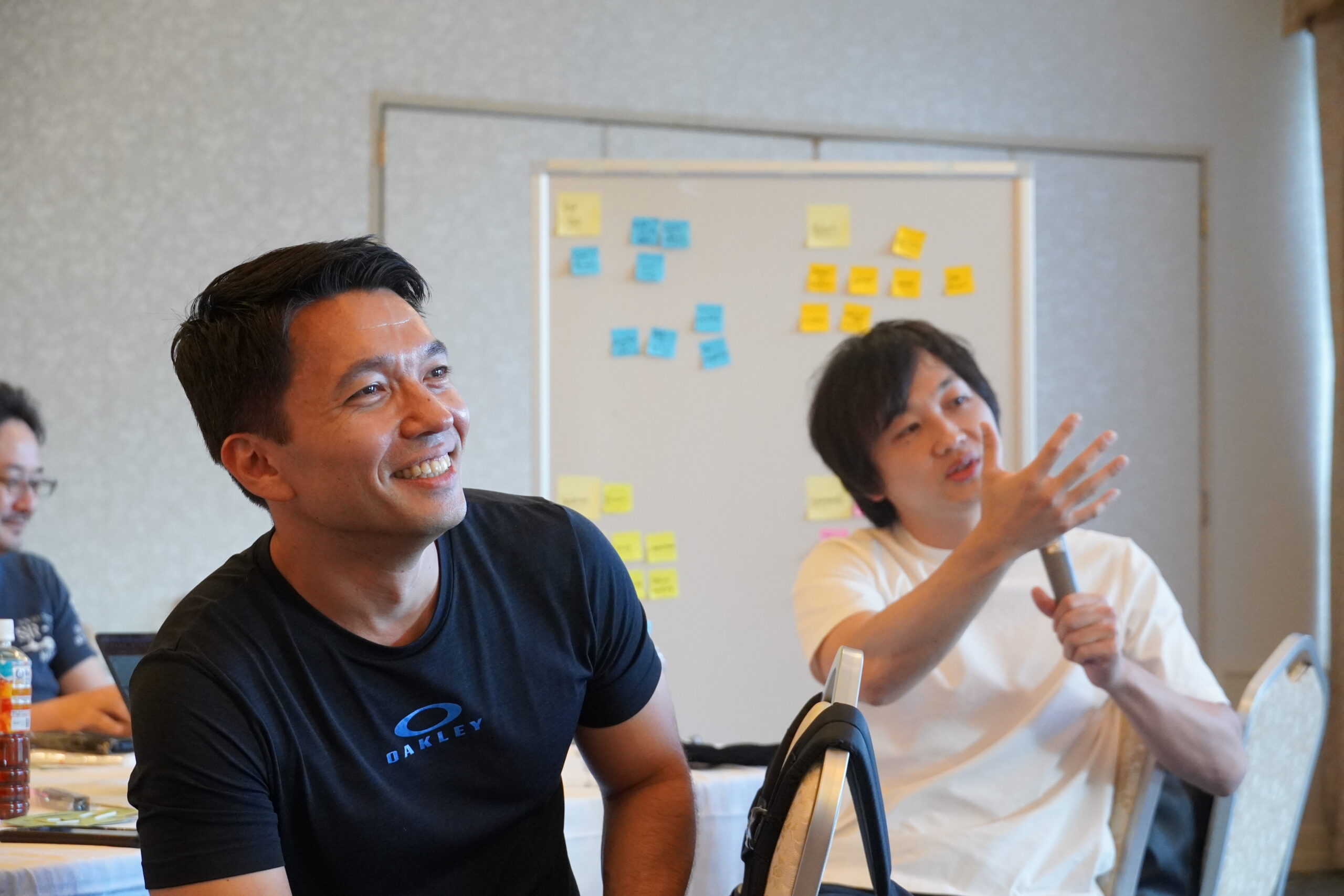
The final session of Day 1 turned its focus to the current challenges of collaboration. Here, participants shared not idealized visions, but the raw, lived difficulties rooted in institutional structures, cultural norms, and human relationships.
“Young researchers lack real autonomy.”
This was the most frequently voiced concern. Although many collaborations originate from the ideas of junior researchers or graduate students, whether these projects survive often depends heavily on the PI’s discretion. As a result, projects can stall when direction remains unclear or when younger scientists feel unable to push forward with their own initiatives. One participant put it plainly:
“Even if the discussion gets exciting, if the PI says, ‘This doesn’t fit the lab’s focus,’ then it’s over.”
Another theme that emerged was the unsustainable burden of scale. What begins as a light, enthusiastic “let’s try this together” can, over time, grow into a project with an overwhelming workload. Participants spoke candidly about how collaborations that once promised excitement and synergy sometimes morphed into sources of stress: “Something that started as a successful collaboration can suddenly turn into the biggest source of pressure.”
This session brought into sharp relief the real walls that researchers face in their daily collaborative work. By making these challenges visible and openly acknowledged, the group laid the groundwork for the next day’s discussions—looking to the future, and imagining new models and systems that could enable more sustainable, equitable collaboration.
A Community Embraced by Smiles and Dialogue
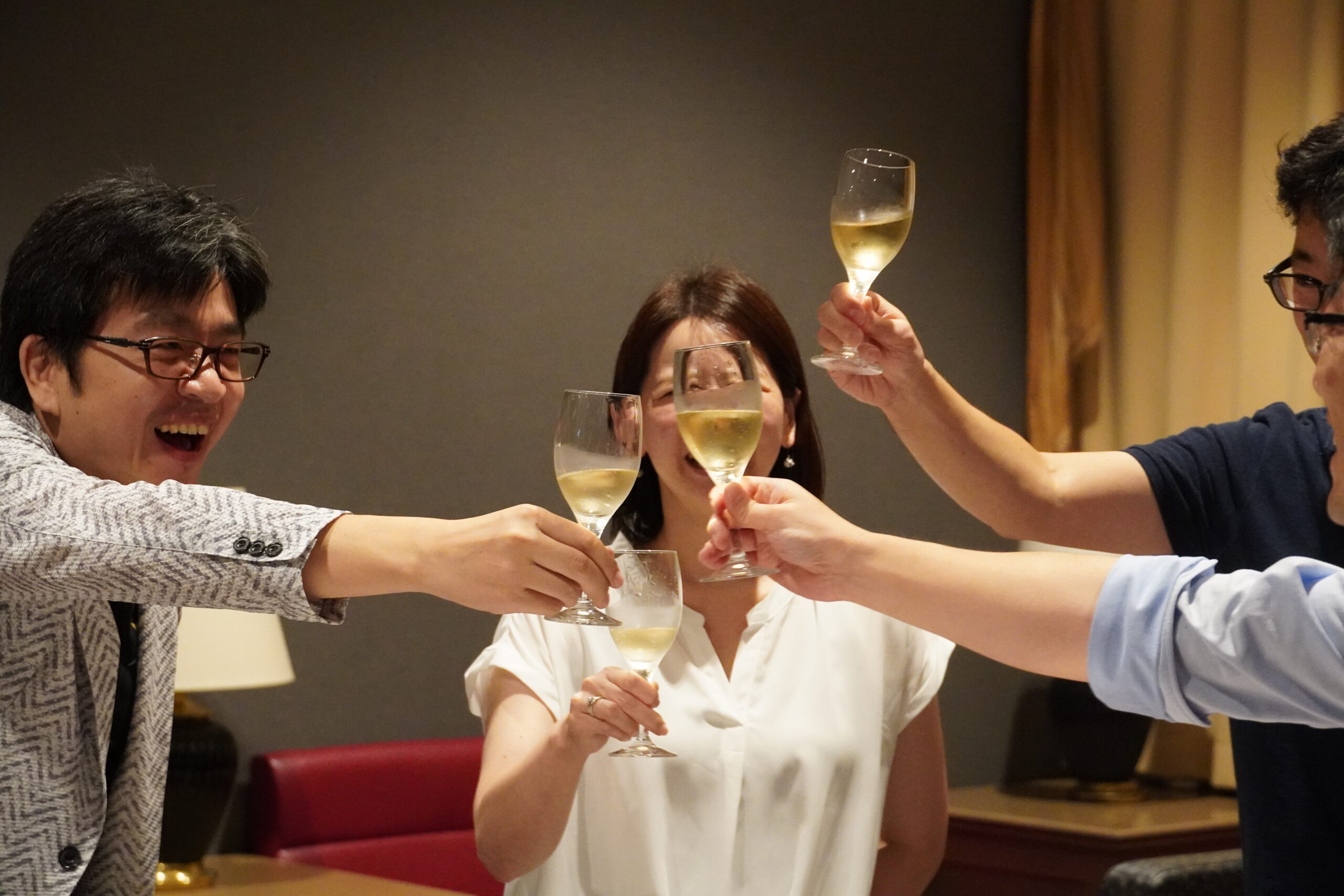
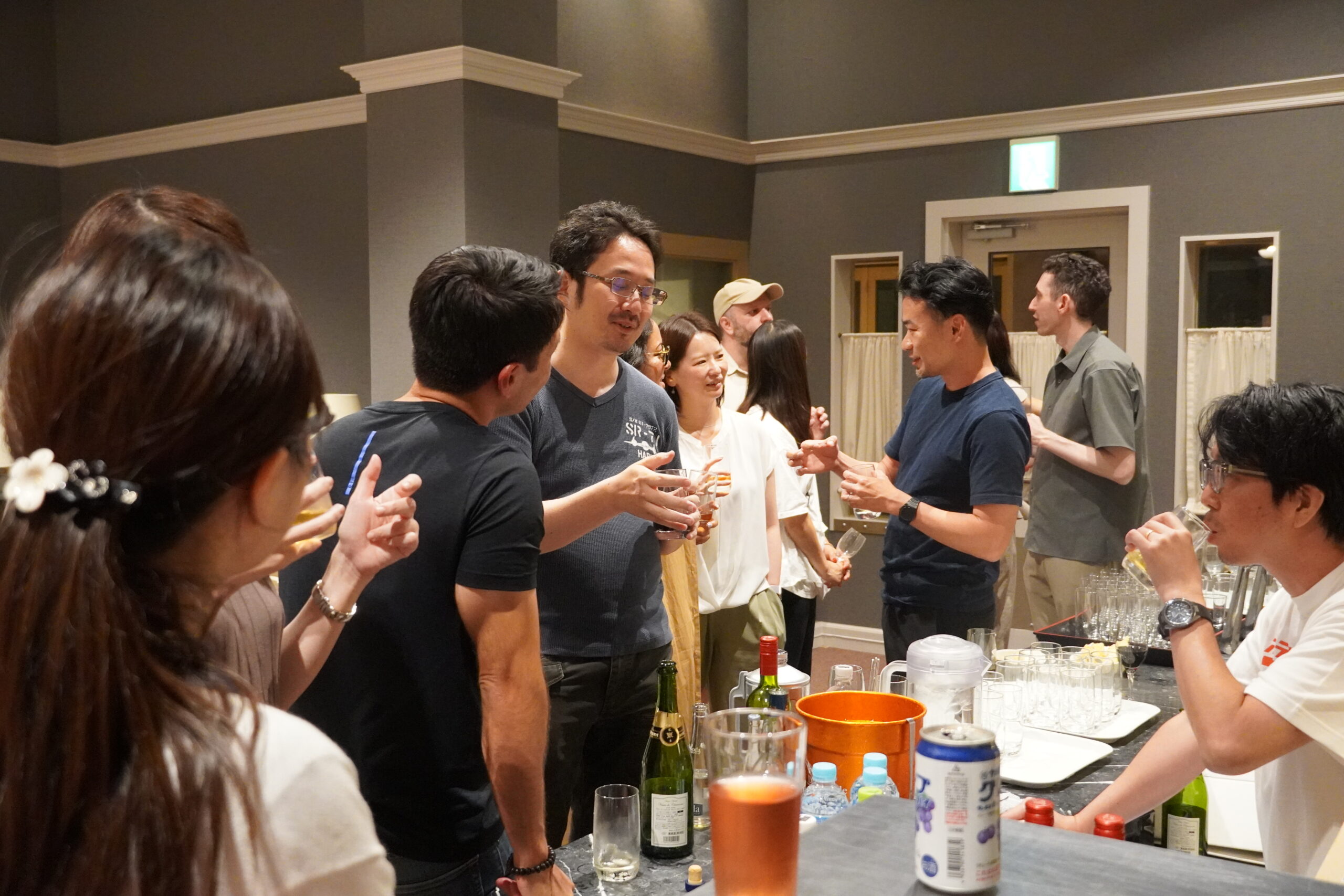
After a full day of intense discussions, participants moved to a new venue for a banquet overlooking the night sea of Atami. Beyond the large windows stretched the gentle waves, illuminated by the lights of the city. Carrying with them the lingering excitement of the day’s passionate sessions, the researchers gathered once again—this time in a relaxed and convivial atmosphere.
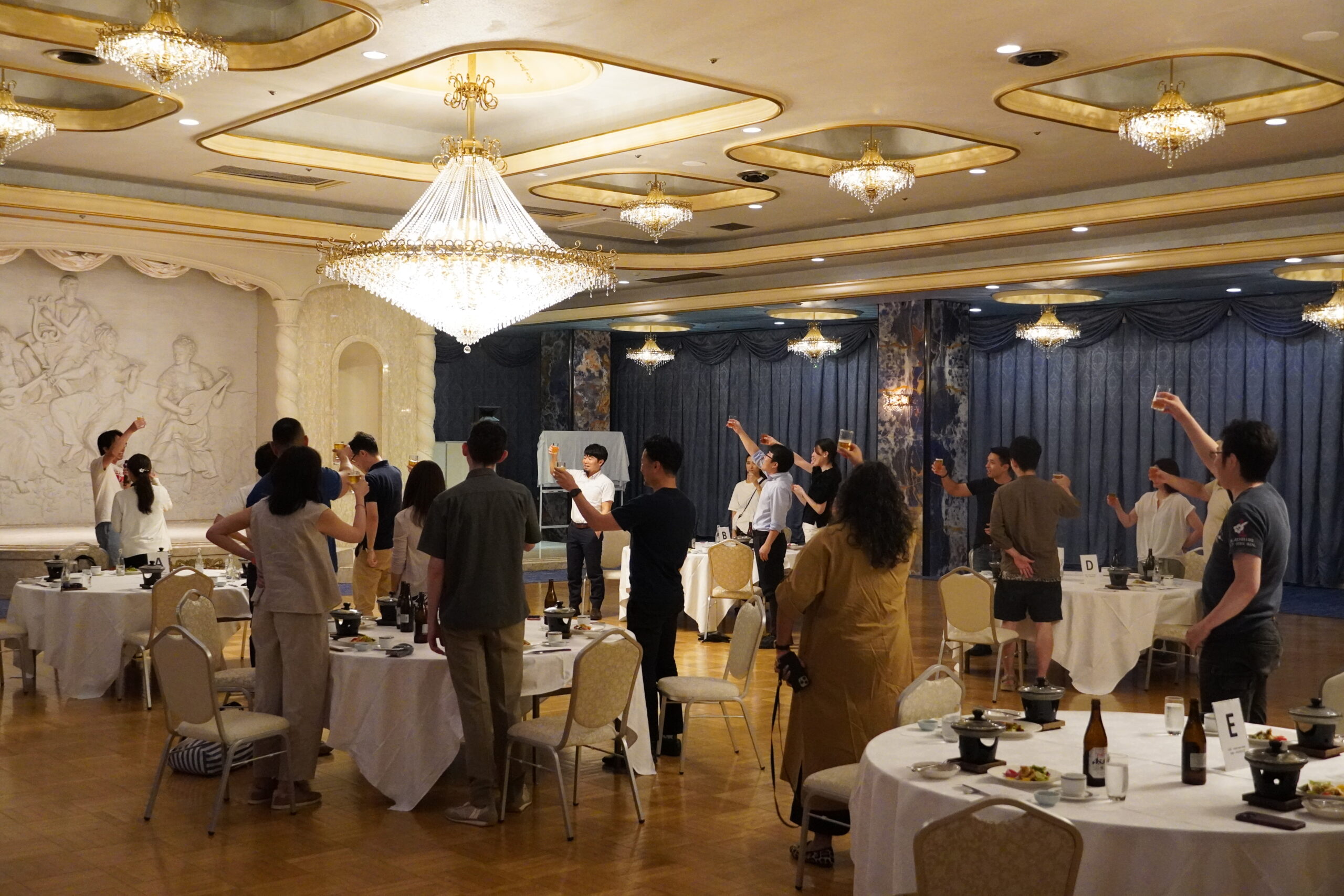
“At scientific events, there are usually only conversations about research, but getting to know each other as individuals makes me feel more eager to work together,” one participant remarked. The dinner thus became more than just a meal—it was a meaningful space where connections deepened. The sight of participants with their children smiling and chatting created a warm and gentle atmosphere, quite different from the serious expressions seen during the day.
As the evening unfolded, the gathering shifted into a second party, where the exchanges became even more free and relaxed. Here, recent newcomers to the Inventor Community were welcomed.. From behind-the-scenes stories of research that wouldn’t surface in a formal session, to lighthearted conversations about hobbies, laughter continued late into the night. The retreat proved once again that it was not only a gathering for research, but also a place where people truly connect.
Day 2: Envisioning the Future of Collaboration
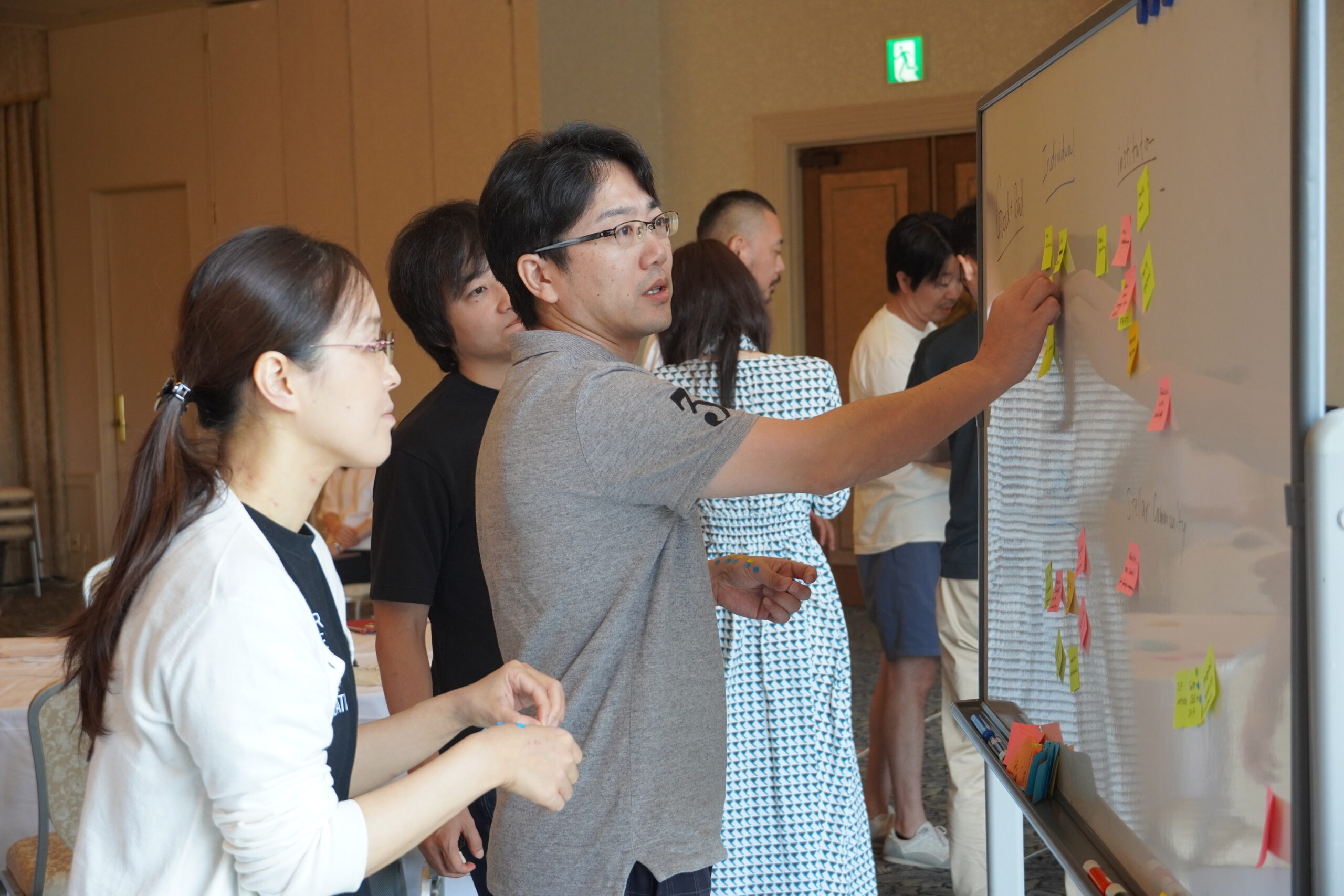
Collaboration Workshop Part 3 – “Future”
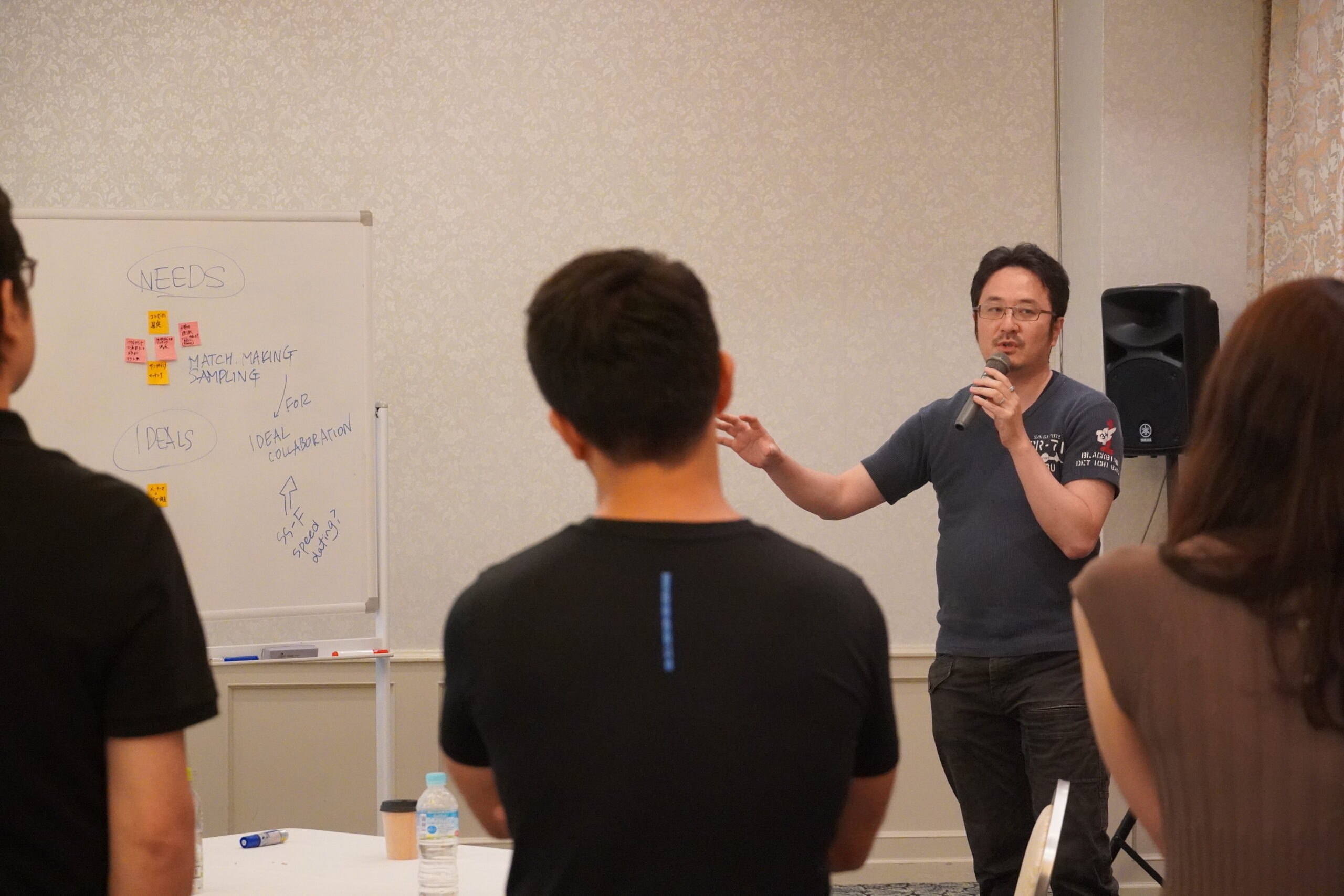
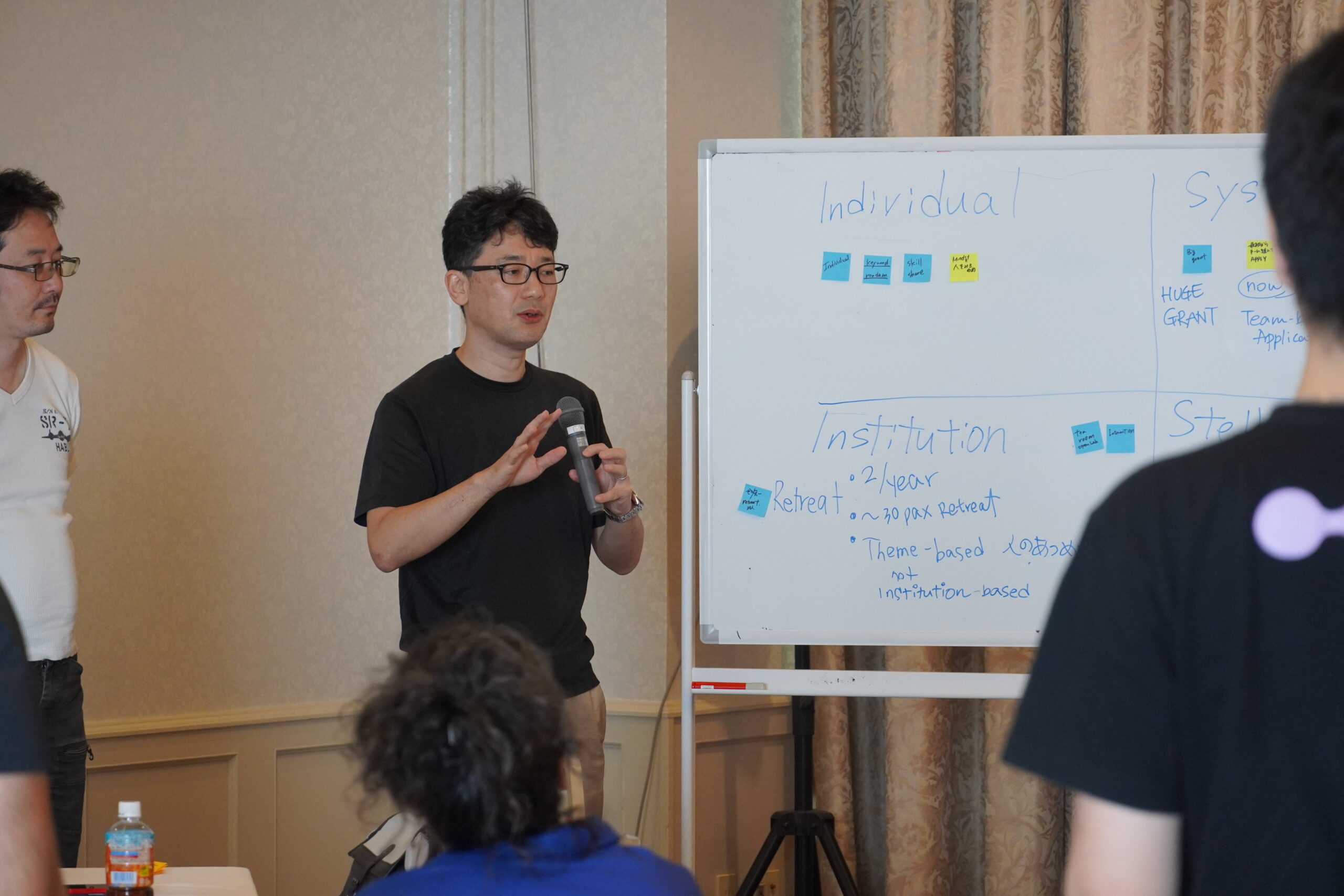
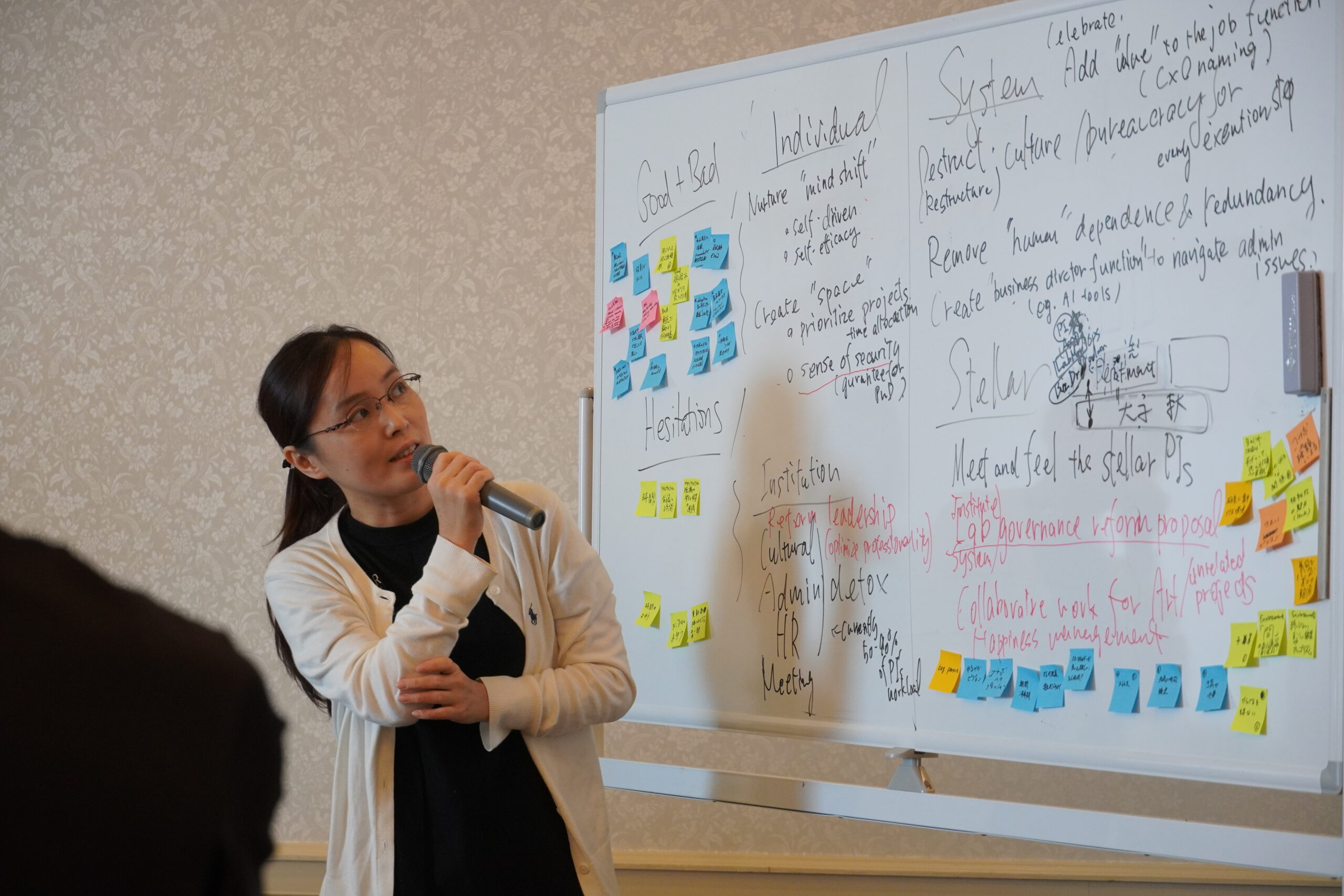
On the morning of the second day, the theme that researchers turned to was “the future.” Building on the reflections of the previous day—on the “past” and “present” of collaboration—they now asked: What kinds of systems and cultures would allow researchers to collaborate more fully and fruitfully in the years to come?
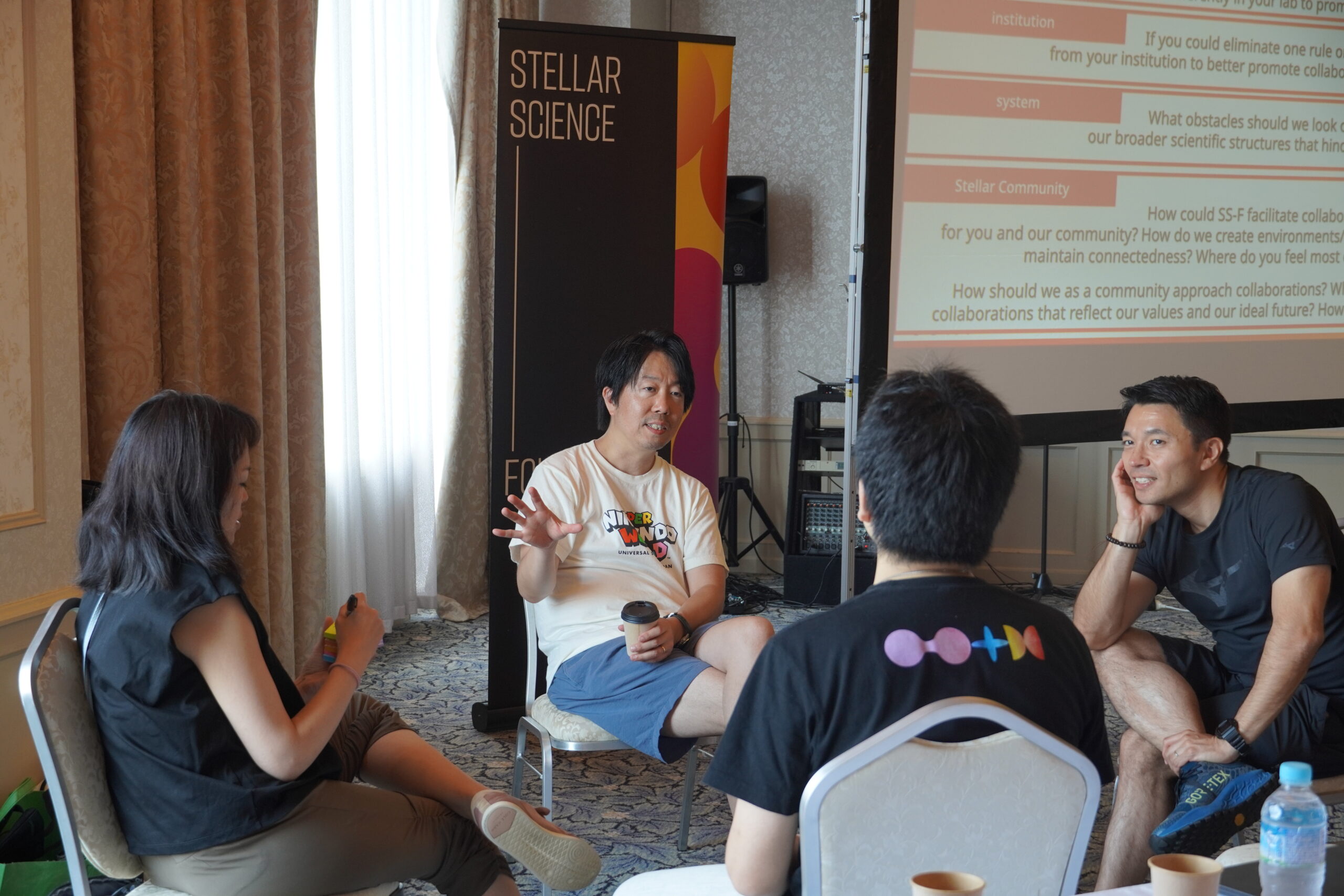
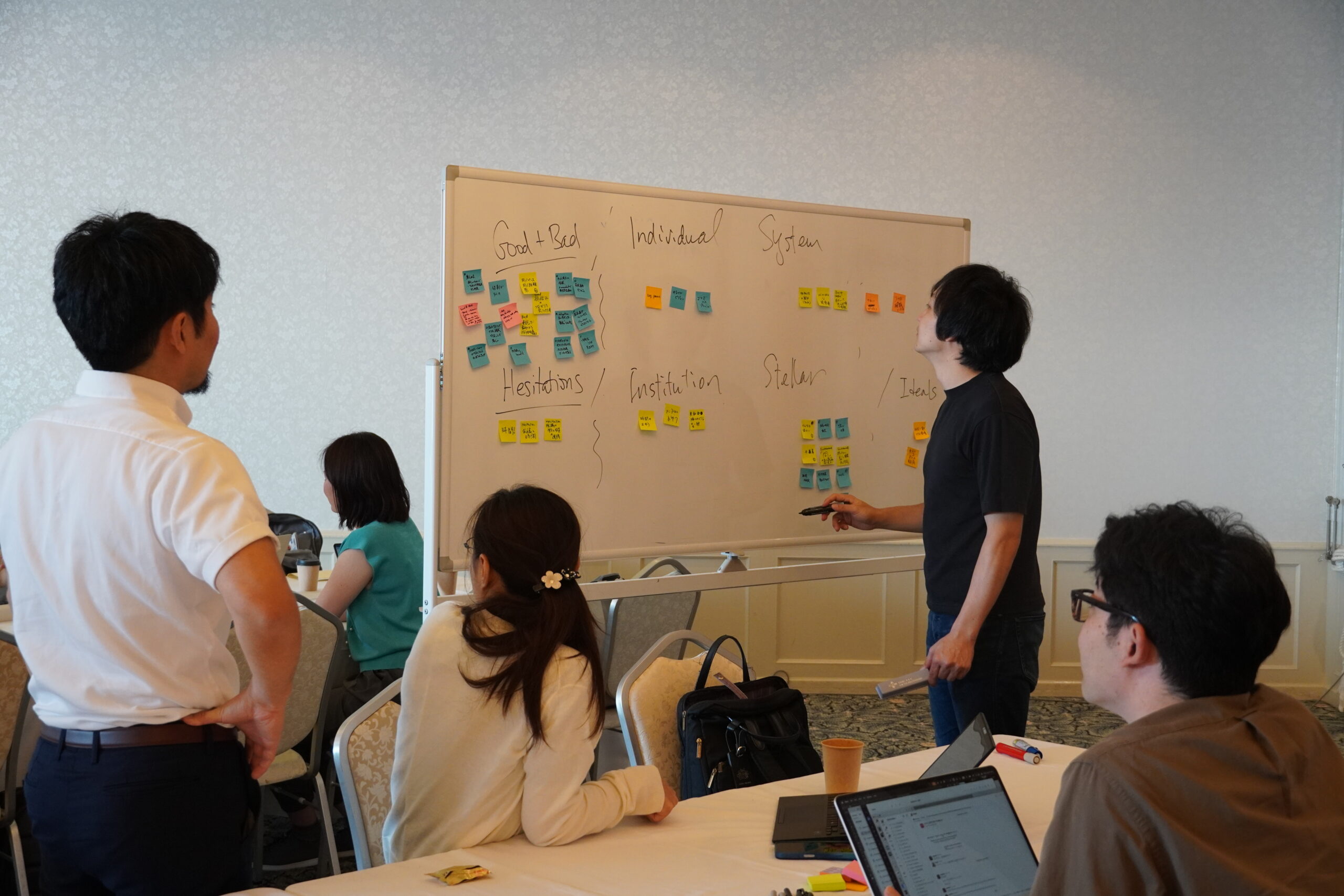
What stood out in the discussion was that no one was simply talking about an “ideal future” in the abstract. Instead, participants brought forward concrete proposals rooted in their lived experience.
One researcher stressed the need for a checklist at the start of a collaboration, clarifying roles and goals. As projects grow, burdens often become unevenly distributed and goals can drift. Setting up agreed-upon rules from the beginning, they argued, would help reduce these structural risks.
The conversation also turned to the importance of creating enabling environments. While conferences and academic meetings allow for deep exchanges within a single field, they rarely provide encounters across disciplines. Participants suggested “theme-based retreats” and “regular cross-disciplinary gatherings” as ways to spark new ideas and partnerships. As one participant put it: “The PRESTO model, where researchers from different backgrounds meet regularly around a shared theme, is one of the best incubators for collaboration.”
On the systemic side, there was wide recognition of the challenges faced by Japanese researchers, who are often overloaded with administrative work that eats into research time. One solution raised was the introduction of lab manager positions, a reform many saw as urgently needed in order to align with international standards.
Other concrete ideas included a small annual “collaboration fund” (e.g. 100,000 yen per researcher) to cover informal meetings, meals, or small cross-disciplinary projects. Even a modest fund, participants suggested, could lower the barriers to initiating collaboration and promote new, exciting research projects.
There were also calls to bridge academia and industry more directly. One idea was to invite CEOs into the SS-F network, creating opportunities to share research findings and industry insights that could feed back into academic work. This underscored the recognition that the future of collaboration is not just about researchers working with each other, but about widening the circle of exchange to include society at large.
Through these conversations, what emerged was not lamentation over obstacles, but the pooling of practical wisdom for moving collaboration forward. The discussions around the “future” generated a rich set of ideas—ranging from institutional reforms to cultural shifts and new collaborative mechanisms—that will serve as a foundation for shaping SS-F’s activities in the years ahead.
At the Conclusion of the Two-Day Retreat
This year’s retreat was an exploration of the question: “What does ideal collaboration look like?” Through the three temporal lenses of past, present, and future, participants reflected on their experiences—sharing both successes and setbacks, acknowledging the real barriers that exist, and searching together for what lies beyond them.
The conversations held overlooking the sea of Atami went far beyond just pointing out challenges. At times, participants stepped outside to do light physical activity, or immersed themselves with childlike curiosity in moments of discovery, all of which opened pathways to envision new systems and cultures for the future of collaboration. What emerged was a palpable sense of determination to build trust across disciplines and positions, and to create new knowledge together.
The insights and proposals that arose over these two days will become concrete actions for SS-F in our mission to support and empower scientific researchers. Our core value, “People-Centric” (beginning with people, connecting through people, and expanding from people), was fully embodied in this retreat; by building upon the voice of each Inventor in our community, SS-F will continue to foster a culture of free and creative collaboration, advancing our core value from Japan to the world.