
Stellar Lab Radio Special Edition Guest: Dr. Koji Murofushi

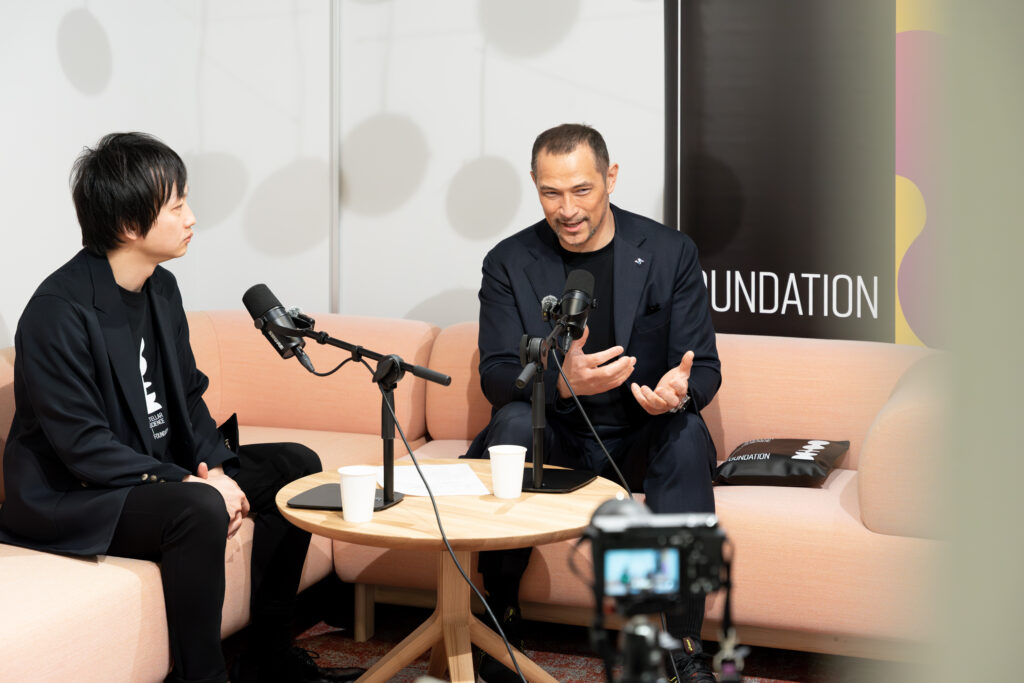
In this special edition of Stellar Lab Radio, we present a featured conversation with Dr.Koji Murofushi, Vice President of Institute of Science Tokyo, in celebration of the opening of SS-F’s first physical research hub, the SS-F Lighthouse Lab.
Where does a researcher’s curiosity come from, and how does it lead to new discoveries?
Using this fundamental question as a starting point, the conversation explores new ways of doing science beyond conventional boundaries—traversing fields that may seem distant at first glance, including sports, life sciences, space, the human body, and society.
What emerges through this cross-disciplinary dialogue is the dynamism of the moment when knowledge is created, and the process by which individual curiosity connects to society.
How does science change when the environment changes?
Why is “human science” becoming increasingly important today?
Through these questions, the discussion delves into the meaning of research environments themselves and the kind of researchers needed in the era ahead.
Set against the backdrop of the newly launched “lighthouse of knowledge” in Yokohama Kannai, this episode offers a forward-looking perspective on the future of science—one that transcends disciplines and institutions—and on how the next generation of talent will be nurtured.
Listen from here
April 17, 2026 – SS-F Lighthouse Lab Grand Opening!
Takebe:
Yes, today marks the opening of SS-F’s Lighthouse Lab. For this very first session here, we are honored to welcome our inaugural guest, Dr. Koji Murofushi, Director of the GENTEN Research Center and Vice President of Institute of Science Tokyo. I’m really looking forward to having a wide-ranging discussion today.
Murofushi:
Thank you.
Takebe:
Thank you so much for joining us today.
Murofushi:
Thank you for having me. I was truly impressed—this is a remarkable facility.
Takebe:
Thank you very much.
Murofushi:
It feels like a dream come true.
Takebe:
Yes, absolutely. We’ve often had conversations about how to pursue unconventional, even “strange” science. Recently, we’ve even discussed it using metaphors like “water and oil.”
By the way, Dr. Murofushi and I first connected when he was serving as Commissioner of the Japan Sports Agency, and we had several opportunities to exchange ideas.
Murofushi:
That’s right.
Takebe:
Since then, I’ve found a lot of resonance in how he thinks about science and approaches research. I’ve become, in a sense, a big admirer.
Murofushi:
Dr. Takebe, as many people know, you received the Ig Nobel Prize. I believe that kind of science is incredibly important, especially in Japan.
It plays a significant role in making science more accessible and engaging to society. And here in Yokohama, creating a lab that brings together science, sports, medicine, and the public in such an accessible way—pursuing that kind of vision—is truly remarkable.
Takebe:
Thank you very much.
Murofushi:
As you’re already doing, there are also initiatives that connect sports and space. For example, the Japan Sports Agency and JAXA have partnered to explore programs that develop top athletes and astronauts together.
As we look toward environments beyond Earth—such as space, the Moon, and even Mars—the question becomes how the human body adapts to entirely new conditions.
You’ve contributed to discussions around human potential in these contexts, and your insights have been incredibly valuable. Your work is highly ambitious, bridging science and its implementation in society—it’s truly impressive.
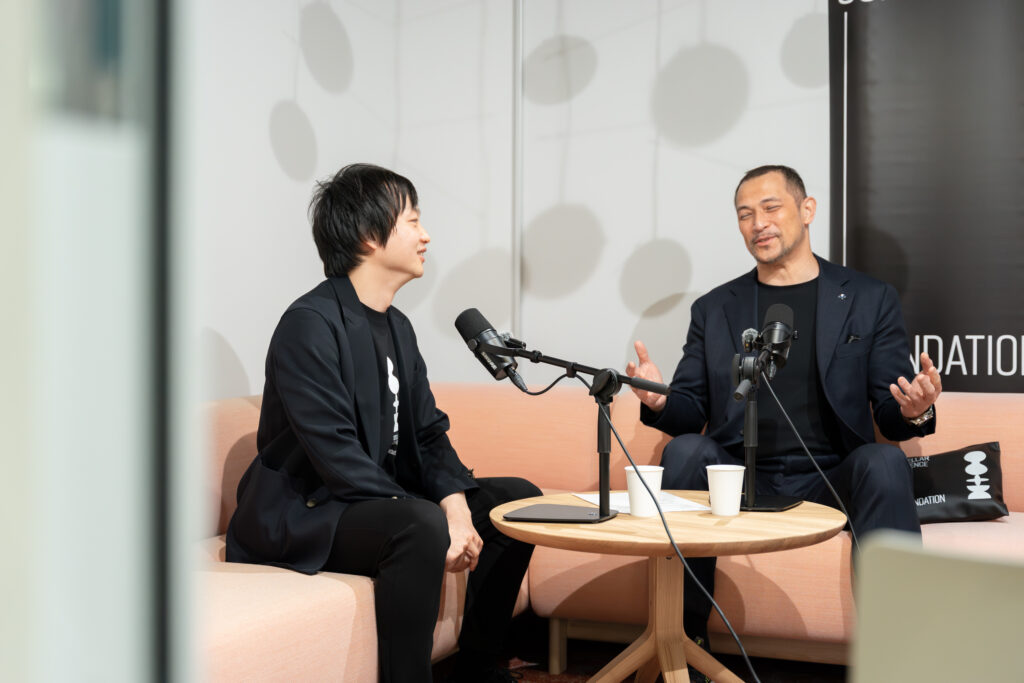
What Happens When You Change the “Place” of Research?
Takebe:
Thank you.
Before creating this new hub, something I strongly felt was based on my experience at the National Museum of Emerging Science and Innovation (Miraikan) in Odaiba, where we had a satellite lab.
There, we invited many members of the general public—healthy individuals—to participate in various studies. For example, we explored topics like well-being and happiness, and since my specialty is the liver, we also conducted liver-related assessments.
What really struck me was that through these interactions, we began to uncover completely new insights—things that had never been recognized before. Even discoveries at the molecular level emerged from that process, and it was incredibly inspiring.
I realized that the moment when science becomes truly exciting often comes when you step beyond what you’ve always studied, or move outside the environments you’ve taken for granted. When the “place” changes, new ideas suddenly emerge in a powerful way.
That’s why, with this SS-F lab, we intentionally moved it outside traditional settings like universities or conventional research institutes.
If you think about this location, for example, you have people coming to watch sports, students studying nearby, and all kinds of individuals passing through. By placing a serious, fully functional research lab right in the middle of such a diverse environment, I believe it can spark entirely new and richer ideas.
With that vision in mind, we named it the “Lighthouse Lab,” positioning it as a flagship—a kind of beacon.
Murofushi:
It truly feels like it will become a lighthouse.
Takebe:
Yes, exactly.
Murofushi:
When different kinds of people come together, something new is bound to emerge. And the reason this can happen is because of you, Dr. Takebe—because of that kind of energy and vision.
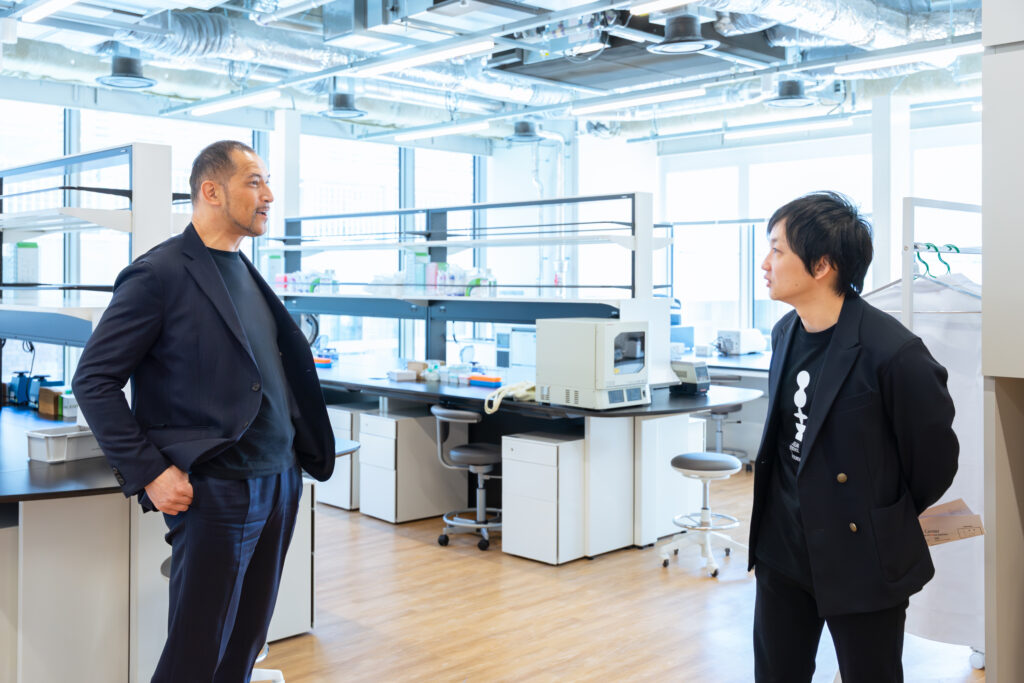
At Stellar Science Lab(SS-F Lighthouse Lab’ facility)
On the “Quality of Curiosity” in Researchers
Takebe:
I really appreciate that.
One thing I always feel when talking with you, Dr. Murofushi, is your openness to curiosity. For example, recently I’ve been really into things like amphioxus and loaches—and you always respond by saying, “That’s fascinating.”
Murofushi:
Yes.
Takebe:
Every time, you ask, “What is that phenomenon?” with genuine interest. Sometimes, amphioxus even shows up in your presentations.
Murofushi:
That’s right. When we think about expanding human potential, we inevitably have to look at other organisms. If we trace our origins, we share a common foundation with them.
The question is: how does life persist and continue across generations, even in harsh environments? You mentioned earlier that idea—life surviving under extreme conditions. For example, loaches, which can breathe through their intestines, might offer hints for entirely new ways of thinking. I find that kind of perspective truly fascinating.
Takebe:
Thank you.
As we’re starting this new challenge ourselves, I believe you’re also about to embark on new initiatives. Are those, in some way, also rooted in these fundamental perspectives on life and its origins?
The Philosophy of “GENTEN (Origins) Research”
Murofushi:
We call it the “GENTEN Research Center.” In sports, whenever something happens, it’s always important to return to the fundamentals—the origin.
I think the same applies to research. Researchers often become deeply immersed in their work, but at some point, they need to step back and ask themselves: What am I doing this for? In that sense, “GENTEN” is also a kind of philosophy.
Up until now, my work has mainly focused on sports, human health, and the human body. But moving forward, I’d like to expand into biological research as well—including studies on more primitive organisms.
Takebe:
Are there any particularly unusual organisms you’re planning to study?
Murofushi:
At our GENTEN Research Center, we have Dr. Kanaya, who joined us as an assistant professor. He studies hydra.
Takebe:
He’s quite well-known—he’s even written books, right?
Murofushi:
Yes. What I find fascinating about his work is the perspective it brings. Hydra is a small organism, about one centimeter long, commonly found in freshwater environments. It has an extraordinary regenerative ability.
Importantly, it doesn’t have a brain. Yet, he proposed that even without a brain, hydra exhibits sleep-like behavior.
Takebe:
That’s fascinating.
Murofushi:
Exactly. When we think about sleep, we usually assume it originates from the brain. But if sleep existed before the brain evolved, then we can’t just approach it as a brain-centered phenomenon.
Instead, it opens up new ways of thinking—perhaps we should also consider it from more peripheral or fundamental biological mechanisms.
Takebe:
That’s true.
Murofushi:
Having researchers like him join us has been incredibly stimulating. I’d really appreciate your insights as well.
Takebe:
Of course, I’d be happy to. By the way, how did you come up with the name “GENTEN”? Did it just come to you?
Murofushi:
Well… we had many discussions, including with you.
Takebe:
Yes, I remember—you suddenly sent me a message saying, “What do you think about the name ‘GENTEN’?” and I was like, “That’s great.” (laughs)
Murofushi:
When you have many ambitions, names tend to become long and complicated—like “Human Something” or “Life Performance Something.” And then it becomes unclear what you actually do.
So we stepped back and asked, What is the essence of this? That’s how we arrived at “GENTEN.” And we also felt that using a Japanese name could be meaningful. (GENTEN =原点, meaning orgin in Japanese)
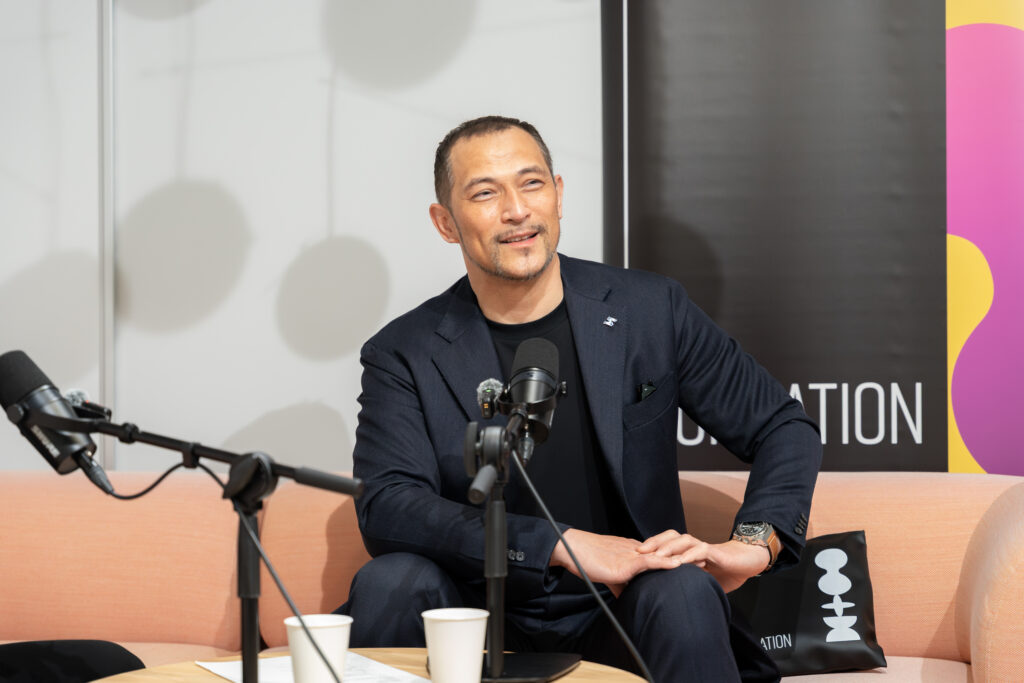
What Defines Researchers Who Cross Disciplines?
Takebe:
I think it’s great—really. From an international perspective, words that carry nuance from Japanese kanji have a unique ability to resonate with people.
In science, it’s important to spark that sense of curiosity—something that makes people feel, this is interesting, this is mysterious. In that sense, “GENTEN” is very clear and powerful.
And as a flagship idea, it’s quite bold. You’re known as someone deeply rooted in sports, and yet you create a research center called “GENTEN”—it’s kind of unconventional, isn’t it?
Murofushi:
Is it? I don’t think it’s as bold as what you do.
Takebe:
No, no—I think I’m quite extreme as well (laughs), but I really admire it.
For example, in my field, there’s Dr. Susumu Tonegawa, a professor at MIT who won the Nobel Prize for discovering immunoglobulin diversity. After reaching that level in immunology, you’d expect him to continue in the same field—but he completely shifted to neuroscience. And now, he’s one of the most prominent figures in brain science worldwide.
There are many examples like that. Researchers who make paradigm-shifting discoveries tend to have endless curiosity—they’re not afraid to jump into entirely new fields.
Murofushi:
I see.
Takebe:
Of course, once you reach that level, maybe there’s nothing left to fear. But for most people, switching fields can feel risky.
Even in my case—coming from iPS cell research and suddenly working on something like intestinal respiration—people might think, Are you okay? (laughs)
Murofushi:
It’s about happiness, isn’t it?
Takebe:
Yes, I’m working on happiness too (laughs).
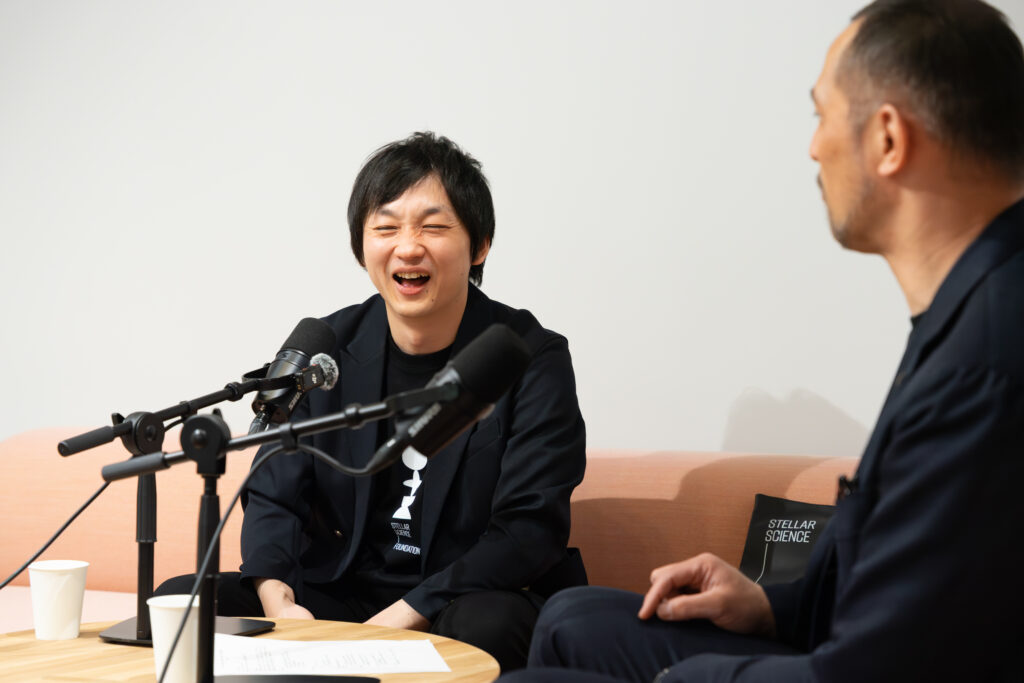
Is the “Core” of Body Control Actually in the Internal Organs?
Takebe:
Speaking of happiness—and going back to your earlier point about sleep existing even without a brain, suggesting that control may lie in the periphery—I completely agree with that perspective.
In fact, I sometimes feel that the term “central nervous system” itself can be quite misleading. Instead, organs like the liver or even the blood might actually play a more fundamental role.
Murofushi:
Exactly—what we often call the “periphery,” including internal organs, may have their own kind of agency.
Takebe:
Right.
Murofushi:
Of course, the brain is important, but in some cases, it may simply be interpreting or rationalizing processes after the fact. What do you think?
Takebe:
Well, in an extreme sense, life can exist without a brain—organisms like hydra are a good example. So the fundamental basis of living may actually be supported by internal organs rather than the brain.
I even think that the unconscious “controller” behind what we perceive as intention might reside in the internal organs.
Murofushi:
We actually have a co-authored paper in progress on this topic, don’t we?
Takebe:
Yes—would you like to explain it?
Murofushi:
What brought us together on this idea is that my work has mainly focused on the musculoskeletal system—movement and physical performance. But we began exploring how internal organ movement is actually connected to external bodily movement.
Takebe:
Exactly.
Murofushi:
For instance, take the liver. In the human body, it weighs around 2 kilograms—sometimes close to 3 kilograms in larger individuals—and it’s located only on the right side.
Takebe:
That’s right.
Murofushi:
And when we breathe, it moves through interaction with the diaphragm. However, in sports science, when we define the body’s center of gravity, we often model the body as a rigid structure using linked segments. In doing so, the weight and movement of internal organs are largely ignored.
So there has been very little research on how internal organs actually move during physical activity—and that’s exactly what we want to focus on.
Takebe:
Yes.
Murofushi:
For example, in activities like hammer throw or gymnastics, where athletes rotate their bodies intensely, we don’t really know what happens to the internal organs.
Even with something as simple as raising and lowering the legs, if we analyze it using MRI, we find interesting patterns. People who are able to stabilize and control their internal organs tend to perform better in external physical functions.
On the other hand, during relaxed states—like diaphragmatic breathing—those whose internal organs move more freely often show better external function.
Takebe:
That’s fascinating.
Murofushi:
So there’s very likely a strong relationship between internal organ dynamics and external movement.
MRI Reveals the Link Between Internal Organs and Movement
Takebe:
There absolutely is a connection.
When I first saw those MRI data, I was shocked. Seeing the liver deform to that extent—changing shape so dramatically inside the body—I thought, “Wait, what?”
Typically, when we think of MRI, it’s done with the patient lying still, being told not to move, and images are taken at specific moments in the breathing cycle. So as a medical researcher, I’ve mostly seen the liver in a relatively fixed, stable shape throughout my career.
But in those MRI images, the liver was flattened, distorted—completely different from what I had ever seen before.
And we know that the liver is highly sensitive to changes in blood flow. Even a slight drop can trigger it to produce glucose, initiating various kinds of metabolic rewiring. So if the organ is undergoing that much physical change, blood flow must also be fluctuating.
In a sense, the liver could be “tricked” into responding—producing more glucose and supplying energy to the muscles. I think those kinds of responses are happening.
Murofushi:
Yes, definitely. And beyond the biological mechanisms you mentioned, there may also be physical aspects involved—mechanical movement and vibration.
I remember seeing work from a researcher at the University of Tokyo showing that in the brain, when water between cells is vibrated, it facilitates movement or flow.
Takebe:
Yes, I remember that.
Murofushi:
So the idea that mechanical movement itself plays an important role might be quite significant.
Takebe:
Exactly. Concepts like “you can improve if you train” might actually be explained by the way internal organs adapt as the body moves, leading to enhanced performance.
What really struck me was how little this area has been explored. That paper made me realize just how much remains unstudied—it’s incredibly fascinating.
Murofushi:
I hope this becomes a starting point, and that it opens up more and more research in this direction.
Takebe:
I completely agree.
Murofushi:
You also mentioned fatty liver. It might be that a healthier liver moves more dynamically. That’s something we definitely want to understand more deeply.
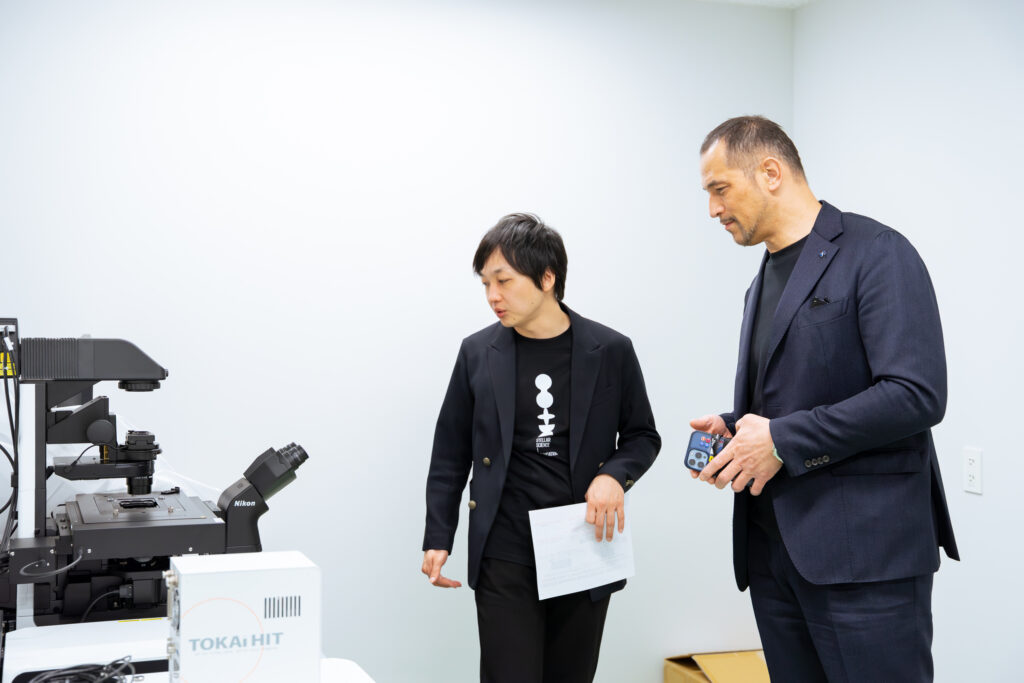
At Stellar Science Lab(SS-F Lighthouse Lab’s research facility)
Why Is There So Little Data on Healthy People?
What Kind of “Human Science” Does SS-F Lighthouse Lab Aim to Build?
Takebe:
That’s exactly right.
This is actually something we cared deeply about when we started building this place—the SS-F Lighthouse Lab.
If you look at this building, BASEGATE Yokohama Kannai, it’s quite unique. On the lower floors, there are entertainment facilities for children, as well as a live-viewing arena where people can watch sports from the neighboring stadium while enjoying food. At the same time, on the upper floors, there are several clinics.
One of the most distinctive is a sports clinic operated by the Yokohama Sports Association.
When you’re in a medical school environment, most of the data we have is from patients with diseases, or from relatively healthy elderly individuals. But we have almost no data on people who are actively moving—people who are physically engaged in activity.
Murofushi:
Exactly. Having that kind of breadth is essential.
Takebe:
Right.
Murofushi:
Otherwise, you don’t really know where you stand.
Takebe:
So as a core concept, we’re framing this as “Human Science.”
What makes this different from “Patient Science” is that we’re not focusing only on disease—we’re focusing on humans more broadly.
By collaborating with the sports clinic upstairs, we can begin to explore new questions—for example, how people who are already physically active can move even better, or what can be done to make them happier.
This expands the scope of who we study.
Researchers who have only focused on disease may begin to study healthy individuals, while those working in sports may start investigating mechanisms at the molecular level that have been uncovered through disease research.
If those intersections start happening here, I think it would be incredibly interesting.
Ultimately, I see this place as a model. If this concept works, it doesn’t have to be limited to here. There’s potential for similar environments to emerge elsewhere—places where interesting people and diverse participants gather, and where research can expand organically.
That’s really the vision we had.
Murofushi:
Without stimulation, nothing moves forward. This place really embodies that kind of stimulation—it’s full of intention.
Takebe:
Yes, that’s exactly what we hope to achieve.
Murofushi:
And right in front of us, there’s baseball as well.
Takebe:
That’s right.
Murofushi:
The stadium is right next door…
Takebe:
Have you been there?
Murofushi:
Yes, I have.
Takebe:
I’m not sure if I should ask this, but do you have a favorite baseball team? (laughs)
Murofushi:
Not particularly. Rather than teams, I tend to follow individual players—like Yoshida from the Red Sox.
Takebe:
I see.
Murofushi:
What about you? (laughs)
Takebe:
Well, growing up in Yokohama, it’s almost ingrained in you. When I used to commute to school, I’d always hear “Go, go, go, Yokohama BayStars!” in my head. So naturally, players like Daisuke Miura—the “Hama no Bancho”—and the BayStars felt very close to me. (laughs)
Actually, this building is developed by Mitsui Fudosan, which owns Tokyo Dome—so that’s the Giants. And DeNA’s Ms. Namba is, of course, associated with the BayStars. At the press conference the other day, they were joking about which team they support.
But both sides emphasized something important—that sports can energize a city. And I think that’s absolutely true. It’s a powerful way to enrich society.
Murofushi:
Yes, we’re seeing that everywhere now—not just in baseball, but also in the B.League and J.League. Arenas are being built across the country.
In that context, these spaces are no longer just gyms. They become places where people gather, where they watch, interact, and connect. They increase the number of people coming into a community, and they help activate entire cities. Sports can play a central role in that.
Takebe:
By the way, now that you’ve returned to academia at Institute of Science Tokyo after your time as Commissioner, you’ll be working more with human-centered research again.
We’re also thinking along those lines with this “Human Science” concept—are there particular research themes that you feel align with that direction?
Murofushi:
There are so many things I’d like to explore.
Of course, sports will remain a core focus, but also broader aspects like human health and well-being—how to cultivate both a healthy body and a rich, fulfilled mind.
At the same time, I think the concept of a “cultural body” is important. Beyond sports and physical movement, there’s also the brain, behavior, and how we experience things culturally.
Takebe:
That’s fascinating.
Murofushi:
Yes, that cultural dimension matters as well. We have internationally recognized researchers at our university working on the brain, and we’re exploring how activities like watching sports can generate a sense of happiness—understanding the effects of viewing sports and culture.
On the biological side, I’d also appreciate your advice. We’ll likely work with organisms like hydra and even genomic approaches, studying animals and biological systems.
But ultimately, all of this should connect back to humans—that’s what “human science” means.
We want to understand how people can develop resilience—the ability to adapt and overcome different environments.
If our research can contribute to that, I think it would be incredibly meaningful.
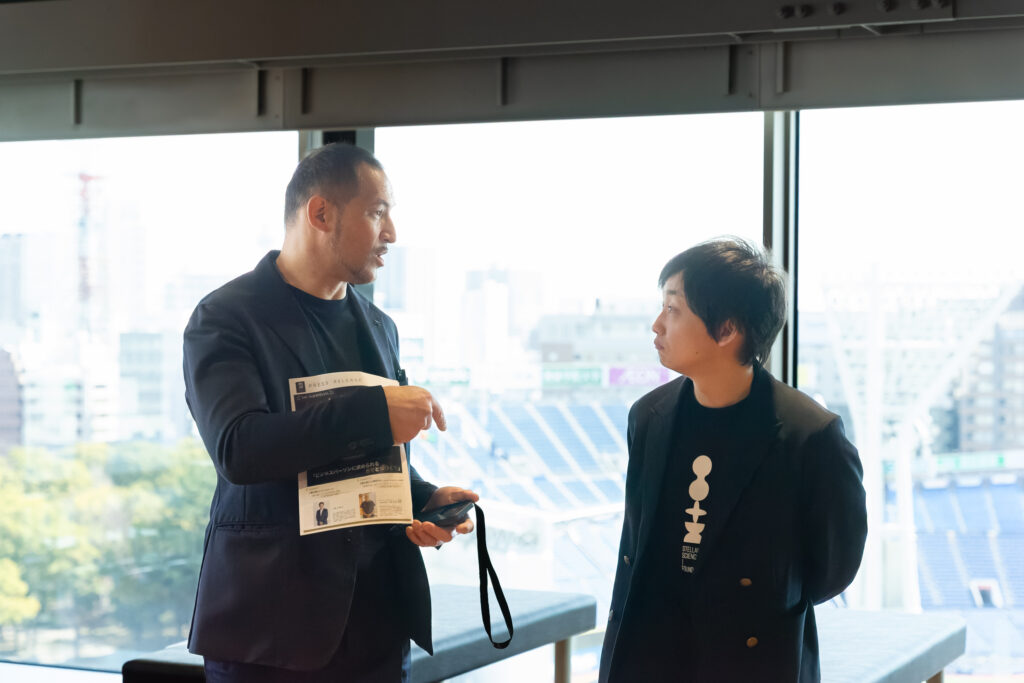
From the “YSA Sports and Medical Gym” on the 8th floor of the BASEGATE Yokohama Kannai Tower, you can look out over Yokohama Stadium.
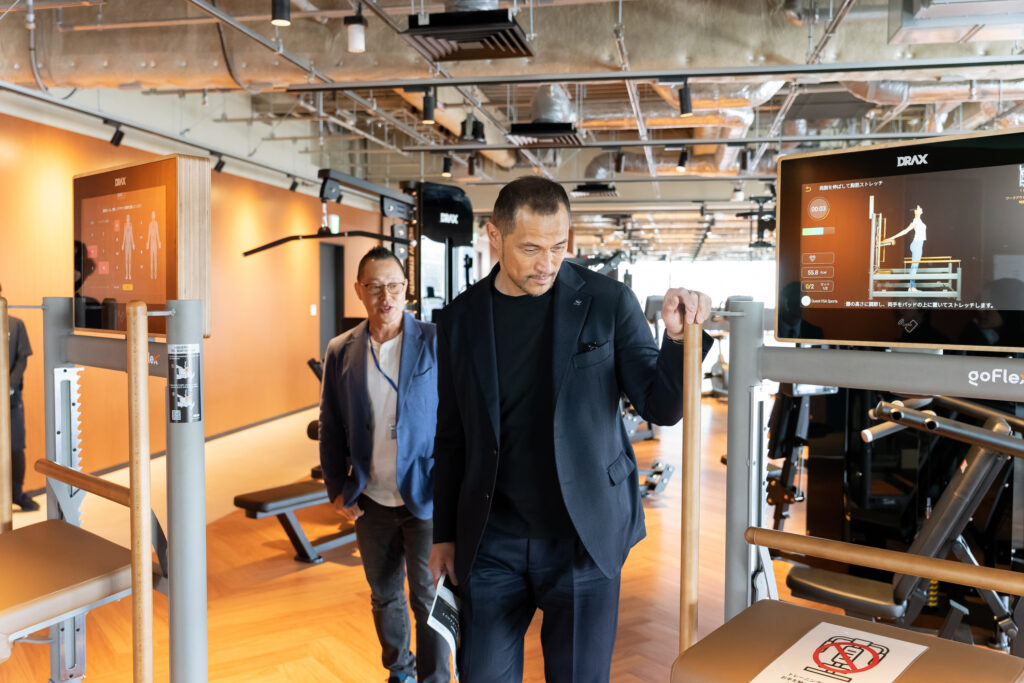
We toured the “YSA Sports and Medical Gym,” a facility that is planned to collaborate with SS-F Lighthouse Lab moving forward.
How “Lightness” Transforms the Body: The Straw Bale and Paper Balloon Experiment
Takebe:
That’s fascinating. And the straw bale research…
Murofushi:
Yes, exactly. I’m glad you brought that up. That research is going really well.
Recently, at MIT, we even talked about the paper balloon and straw bale experiment.
Takebe:
Really? Please give us a brief overview.
Murofushi:
When people go to the gym—like here, we also have a gym—the main purpose is usually strength training. It’s all about weight, right?
Whether it’s 50 kilograms, 30 kilograms—even 1 kilogram, it’s still about heaviness.
Takebe:
Right.
Murofushi:
Now, in terms of muscle physiology, we have alpha fibers and gamma fibers. If gamma fibers become overly tense, the muscles stiffen—that’s what we call a gamma bias.
Takebe:
I see.
Murofushi:
In that state, athletic performance actually declines. Even if you’ve built strength, you can’t relax during competition because the gamma bias is too strong.
And that often comes from training methods that rely too much on weight.
Instead, the real question is: can you perceive lightness?
This is actually a very important theme. I think there are people who go to the gym frequently, yet their ability to use their body becomes less refined.
Takebe:
Interesting.
Murofushi:
You sometimes see people who look very muscular, but their muscles aren’t relaxed. When that happens, they can’t utilize elastic, stretch-based force—they’re limited to purely concentric contraction.
But muscles generate the greatest force when they are stretched to their limit—almost to the point of breaking.
So in the end, the essence of movement might come down to whether you can truly sense lightness.
With light objects, gamma fibers don’t overactivate, so excessive tension doesn’t occur. Using this principle, when people try lifting a straw bale, some who couldn’t lift it before suddenly can—and vice versa.
We’re currently running experiments using markers to study this.
Takebe:
It’s incredible.
When I first experienced it, you introduced something called “paper balloon training.” After interacting with a soft, light paper balloon—something very familiar in Japan—you close your eyes and then lift an object. Suddenly, even something as heavy as a straw bale becomes liftable, even for someone like me without much physical strength.
Murofushi:
Exactly. It makes you wonder—how were people in the past able to carry 60-kilogram straw bales, even women? They didn’t go to gyms.
Takebe:
That’s true—they didn’t go to gyms. So it’s not just about continuous training, but also about how the body is used…
Murofushi:
Exactly.
Takebe:
Is this similar to the judo concept of “ju yoku go wo seisu”—softness overcoming strength?
Murofushi:
Absolutely. I think it’s very closely related.
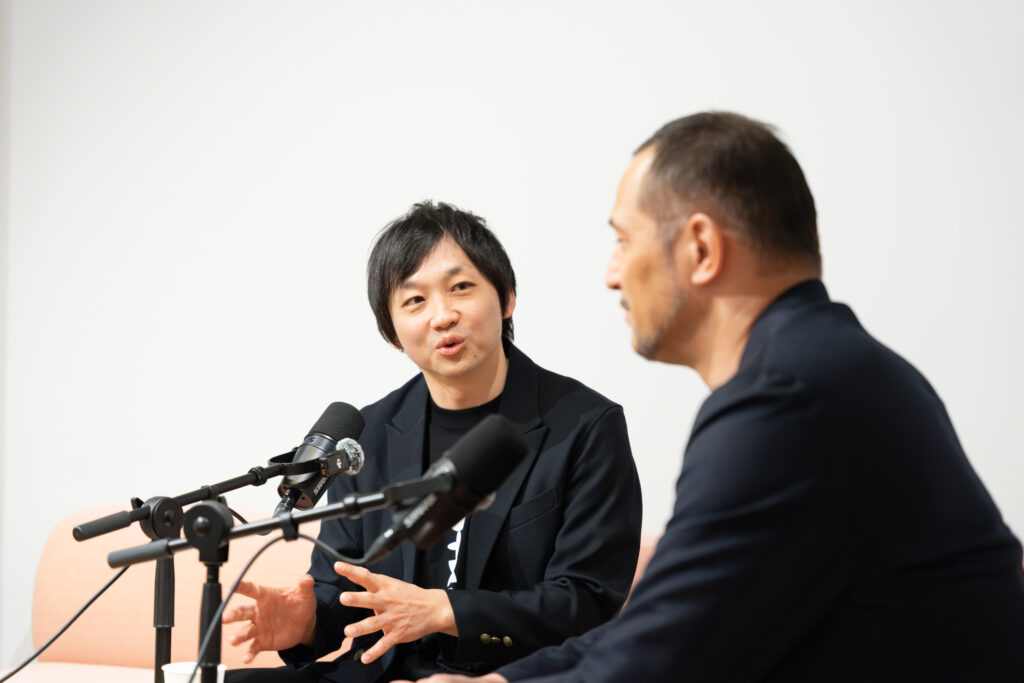
Does Fluctuation Drive Optimization?
How the Rhythm of Eating and Not Eating Trains the Body
Takebe:
In our field, especially in metabolism, there’s actually a very similar idea.
It’s not good to just keep eating continuously—or to simply stop eating altogether. What really matters is the fluctuation: cycles of eating and not eating, or reducing intake and then restoring it. That dynamic range is important.
So when it comes to metabolism, it’s not just about saying, “You’re overweight, so stop eating.” The approach itself matters much more.
There’s a concept called metabolic elasticity. It refers to this kind of flexibility—eating, not eating, eating again—through which the liver is essentially trained, allowing it to perform at its best.
Murofushi:
That’s interesting. If eating and not eating can train the body, how does the stomach fit into that?
Takebe:
It’s less about the stomach and more about absorption in the small intestine.
Murofushi:
So it’s all connected—the stomach and the small intestine?
Takebe:
Exactly. The small intestine and the liver are tightly linked. For example, fats are absorbed—mainly in the later parts of the intestine—and once they reach the liver, the liver decides how to distribute them.
If they accumulate in the liver, that leads to fatty liver. If they’re stored in adipose tissue, that leads to obesity.
But if you continuously avoid fat intake, the liver’s ability to respond and adapt actually declines.
It’s very similar to what we discussed earlier—if you only rely on constant muscle contraction, performance suffers. In medicine, we’ve traditionally focused on one-directional control, like “just restrict this” or “just endure that.”
But in reality, applying a more elastic, back-and-forth type of stress may be more effective.
Takebe:
What about mechanical stimulation or vibration?
Murofushi:
I think it plays a significant role.
Murofushi:
I’d like to ask you about something. When people run long distances, like in a marathon, they often get a stomach ache.
Takebe:
Well… I don’t run that much (laughs).
Murofushi:
It depends on the condition, but some people do experience it. Could it be related to the diaphragm—or perhaps even the liver?
Takebe:
Actually, it’s often said that the liver can twist slightly. There’s a ligament called the falciform ligament that anchors the liver, and when it gets pulled, it can cause pain.
Murofushi:
That’s fascinating. How would you fix that?
Takebe:
I don’t think there’s a clear way to fix it—it’s probably not well understood yet. But from what we saw earlier…
Murofushi:
So there are nerves involved as well?
Takebe:
Yes. And ligaments are essentially connective structures, so the falciform ligament holds the liver near the center. There are also ligaments above it on both sides, so they may be getting stretched.
It’s interesting—no one really pays attention to tension in that area.
Murofushi:
I see. Do you think it could be released or loosened?
Takebe:
Possibly. For example, with ultrasound or other techniques…
Murofushi:
That could even improve long-distance performance, right?
Takebe:
It might. If you increase flexibility there, it could have an effect.
Murofushi:
Physical therapists often work on muscles like the psoas or iliopsoas.
Takebe:
Yes, those are well-known.
Murofushi:
They sometimes apply deep pressure to release tension—but maybe it’s actually the liver that’s involved.
Takebe:
That’s a really interesting perspective. And you’ve mentioned acupuncture before—those kinds of approaches are still not fully explained at the mechanistic level.
Murofushi:
Right. But perhaps techniques like acupuncture help awaken bodily awareness.
And in that sense, the internal organs are already communicating—through various biochemical signals. It’s a very deep and complex system.
Beyond Silos: Why the “Ig Nobel Mindset” Matters
Takebe:
It’s really fascinating—and quite deep.
About two weeks ago, there was a paper published in Cell—I think I even sent it to you. It showed that when the liver responds to exercise, it releases cytokines—specifically hepatokines or “exerkines,” exercise-induced factors.
These molecules improve blood flow to the brain and can even help alleviate dementia.
It sounds plausible, but surprisingly, this kind of research hasn’t really been explored.
Because when you think about it, you’re crossing at least three different fields: physical exercise, liver biology, and brain function.
Murofushi:
That’s exactly why it doesn’t happen in siloed systems.
Takebe:
Right—it doesn’t.
Murofushi:
That’s why the “Ig Nobel mindset” is so important.
Takebe:
You might be right—the Ig Nobel mindset really matters.
In conventional academic environments, if your ideas become too unconventional or jump too far outside established frameworks, it’s difficult to sustain support for that kind of work.
People like us might naturally think in those ways, but for the next generation—those just starting their research careers—they often end up working within predefined systems or “boxes.”
It’s not easy to break out of that mindset.
Researchers like you, who pursue these kinds of unconventional approaches—you’ve managed to gather great people around you. But how do you think we can continuously nurture and produce more researchers like that?
Murofushi:
That’s a difficult question. But I think, at the very least, it’s important to have a foundation—a sense that research should ultimately connect to something beyond itself.
If possible, it should lead to impact—on society, on people.
Of course, some research is only recognized later, but creating opportunities like this lab—bringing research into society—has real meaning.
Even for small-scale research, it’s important to hold onto a vision of how it might eventually contribute—to people, to the Earth, or even to humanity.
Takebe:
When themes like space come into the picture, it naturally becomes exciting. It makes you think about what we can leave behind for the next generation, even as times change.
Murofushi:
Space is interesting. Not everyone will go there, but we’re entering an era where even private space travel is becoming possible.
It’s often said that you only truly understand Japan when you go abroad—that it reveals your identity.
In the same way, I think we become aware of our identity as inhabitants of Earth when we look at it from space. Astronauts often say their perspective on life changes.
By placing our perspective at a distance and viewing things from above, we begin to understand our position.
Takebe:
That’s the “overview effect.”
Murofushi:
Exactly. And I think science may also benefit from that kind of perspective.
Takebe:
Yes—when your viewpoint shifts, you realize how small the things you’re focused on might be, and at the same time, how they could connect to something much larger.
Murofushi:
Right. It helps you see new connections—what should be linked, or whether bringing in perspectives from other fields could lead to something new.
たいな。

At Stellar Science Lab(SS-F Lighthouse Lab’s research facility)
“Joyspan” and the Future of Researchers:
How Happiness, Story, and Challenge Shape the Next Generation of Science
Takebe:
That really resonates.
Actually, about a month ago, I attended an event by TIME magazine—
Murofushi:
Congratulations.
Takebe:
Thank you. Yes, I was fortunate enough to be selected for the TIME100 list.
At the event, I met a gerontologist who introduced a concept I found really compelling.
As you know, over the past 50 years, medicine has focused on extending lifespan—the life span. And as a result, life expectancy has increased dramatically, bringing us into an aging society.
But then we realized that lifespan alone isn’t enough. That’s where the idea of health span came in—the period during which people can live without needing care or losing the ability to do what they want.
Over the past decade, many researchers have worked hard to improve health span, and it remains an important concept.
But this researcher said, “The next era is about joy span.”
Apparently, her book became a bestseller in the U.S., because people realized, “This was missing.”
Joyspan refers to how long we can live with a sense of joy—how much of our life is truly fulfilling and meaningful.
Going forward, healthcare and medical industries need to shift their thinking toward this idea.
In fact, I’ve been researching happiness myself, and I feel this is closely related—whether people can do what they truly want, whether they can find joy even in small things.
If that becomes central, then human science needs to go beyond its traditional framework and engage more deeply with happiness itself.
In that sense, I feel like a signal has been raised—a new direction is emerging.
So rather than focusing only on health span, I hope we can also explore joyspan, and ultimately contribute to extending lifespan as well. That’s something I’d love this lab to work toward.
Murofushi:
I think sports inherently contain that kind of element.
Of course, there’s the simple joy of physical movement. But more fundamentally, sports are always about engaging with difficulty.
Climbing, for example—you’re scaling sheer cliffs in dangerous conditions. It’s inherently risky.
The same applies to Paralympians. Encouraging visually impaired individuals to run or swim—there was a time when people might have said, “That’s too dangerous, don’t do it.”
Even in the Winter Olympics—ice is slippery and dangerous, yet people choose to engage with it. Skiing is the same.
Takebe:
That’s very true.
Murofushi:
Running a marathon—40 kilometers—many people would say, “I don’t want to do that.”
But sports have the ability to transform such challenges into something enjoyable.
It’s not something given to you—it’s something you create yourself. You design your own experience.
I think that mindset is very important—and it applies to this center as well.
Two hours can feel completely different depending on how you perceive it. If it’s enjoyable, it passes instantly. If it’s boring, it feels endless.
There’s always a gap between objective reality and subjective experience—how we interpret things really matters.
In a sense, “facts” and “truth” may not always be the same.
Takebe:
Recently, I heard you’ve also become interested in fiction.
Murofushi:
Yes, I’ve gotten quite into it. I’d like to pursue it further.
Takebe:
So the day we see a novel written by Dr. Murofushi might not be far off.
Murofushi:
Well, I may need to rethink the protagonist. I initially made her a female office worker.
Takebe:
Based on someone real, perhaps?
Murofushi:
Yes. There are many office workers dealing with things like poor circulation or workplace stress. I was trying to depict her transformation—but it didn’t quite resonate with the publisher.
Takebe:
Maybe it will resonate somewhere else.
Murofushi:
Possibly.
Takebe:
Then let’s publish it ourselves (laughs).
You came up with the idea on a flight, started writing, and already thought about publishing—it’s amazing. I’ve even read parts of it—and I appear in it from time to time (laughs).
Murofushi:
Yes, I like incorporating people close to me.
Takebe:
It’s incredibly engaging. And what’s striking is that you continue to challenge yourself outside your original field.
Murofushi:
I don’t think of it as a “challenge,” necessarily. But fiction allows me to convey truths in a way that resonates more deeply.
When you present facts alone, people don’t always feel them. But fiction can truly move people—it stimulates imagination.
Takebe:
That’s true.
Murofushi:
For example, I explore how someone manages themselves to become stronger—through the journey of a fictional character. She becomes mentally exhausted, loses direction, even struggles to understand her relationship with her father—but eventually recovers.
I personally find it very compelling.
Takebe:
It really is.
Murofushi:
Of course, publishers have their own perspectives. And in the book, readers also make choices along the way.
Takebe:
Exactly—it’s like a role-playing game.
There used to be “gamebooks,” and I actually created something similar once. It was designed for patients undergoing rehabilitation—they could walk around the hospital while following a story, completing their rehab as they explored.
Murofushi:
That’s very similar. In my story, the protagonist—a female office worker—is invited by a friend to exercise and goes to the gym. But her friend is very intense, and the next day she’s completely exhausted and unable to move.
Then the reader is asked, “What would you do?” and the story branches based on that choice.
Takebe:
I think everyone here is probably a bit surprised—like, “Wait, isn’t he a sports scientist?” (laughs)
Murofushi:
Exactly (laughs).
Takebe:
But this is what’s so interesting—the ability to keep leaping across fields. And even if it takes time, you actually bring those ideas into reality.
Murofushi:
Yes, that’s right.
A Message to the Next Generation
Takebe:
That’s incredibly important.
As a final question—do you have any message or advice for younger generations, or for those who are just starting out?
Murofushi:
We’re living in a time of great uncertainty and complexity.
Precisely because of that, if you don’t pursue what is truly meaningful to you—what you genuinely want to do—you risk wasting your time, and you won’t be able to create real impact in the world.
So I would encourage you to believe in yourself. Just like in sports, you need to trust in your potential—even if it’s small.
Maybe it starts as just 5%, but with effort and creativity, it can grow to 10%.
Instead of choosing something that’s already guaranteed to succeed from the beginning—that’s not very interesting—you should pursue even the smallest possibility and try to expand it, to draw it closer to reality.
I hope to see more young people—whether researchers or athletes—who can grow in that way.
Takebe:
I completely agree.
In the long run, I think that kind of approach ultimately leads to your own happiness.
Not giving up, engaging with even small possibilities—whether we call it a “challenge” or not—and continuing to develop your own interests… that process itself leads to happiness.
In that sense, if the mindset of science—this way of thinking—spreads more broadly and takes root in society, it could become a powerful movement in the world.
Murofushi:
Also, someone like Dr. Takebe—there must have been people who influenced you, whether your parents or mentors.
Meeting people who can refine and elevate your potential is incredibly important.
Takebe:
That’s true.
Murofushi:
I’m sure there have been many people like that in your life.
Takebe:
Yes, at many key moments. But if I had to name one, I’d say my grandfather had a particularly strong influence.
Both of my parents shaped me a lot, but both of my grandfathers were more of the “challenger” type.
My parents, on the other hand, valued stability in life—perhaps because my grandfathers were so unconventional.
Seeing those two generations had a big impact on me.
My maternal grandfather was an entrepreneur who sold cars, and my paternal grandfather was originally part of the kamikaze corps during the war, but survived and later went to the U.S. to work in trade.
Murofushi:
In the U.S.?
Takebe:
Yes. He actually disliked America, but he took an English dictionary with him, decided to go anyway, and lived in Manhattan.
His life had many ups and downs, but he stayed there in the end. I only met him a couple of times, but I think that spirit may have influenced me.
Murofushi:
That makes sense.
Takebe:
What about you? Did someone close to you have a similar influence?
Murofushi:
My father was a two-generation “iron man,” in a sense.
But more than that, I think my scientific way of thinking—analysis, observation—came from him. Even though he was from an older generation, he valued those things deeply, perhaps because of the hardships he experienced.
Takebe:
I see.
Murofushi:
People like him, who build the foundation for the next generation—it’s not an easy role.
Takebe:
And recently, he’s been interested in Neanderthals, right?
Murofushi:
Yes, very much so. He even wrote a book about them.
Takebe:
That’s incredible.
Murofushi:
He used to say, “Humans are all about stimulus and adaptation. Without stimulus, nothing happens.”
Takebe:
That must have been very inspiring.
Murofushi:
Yes, I heard things like that from a young age.
Takebe:
Thinking about the next generation, perhaps we don’t need to call it “mentorship,” but if we can provide even a small stimulus—something that sparks curiosity—that might be enough.
Murofushi:
Exactly. We need to be able to think on a larger scale.
Takebe:
I completely agree.
Murofushi:
Thank you for today. This is just the beginning.
Takebe:
Yes, it is.
Murofushi:
I hope this lab, starting here in Yokohama, will energize not only Japan but the world.
Takebe:
Thank you. We’d love to have you visit again—and hopefully collaborate together.
That concludes today’s episode. Our guest was Dr. Koji Murofushi. Thank you very much.
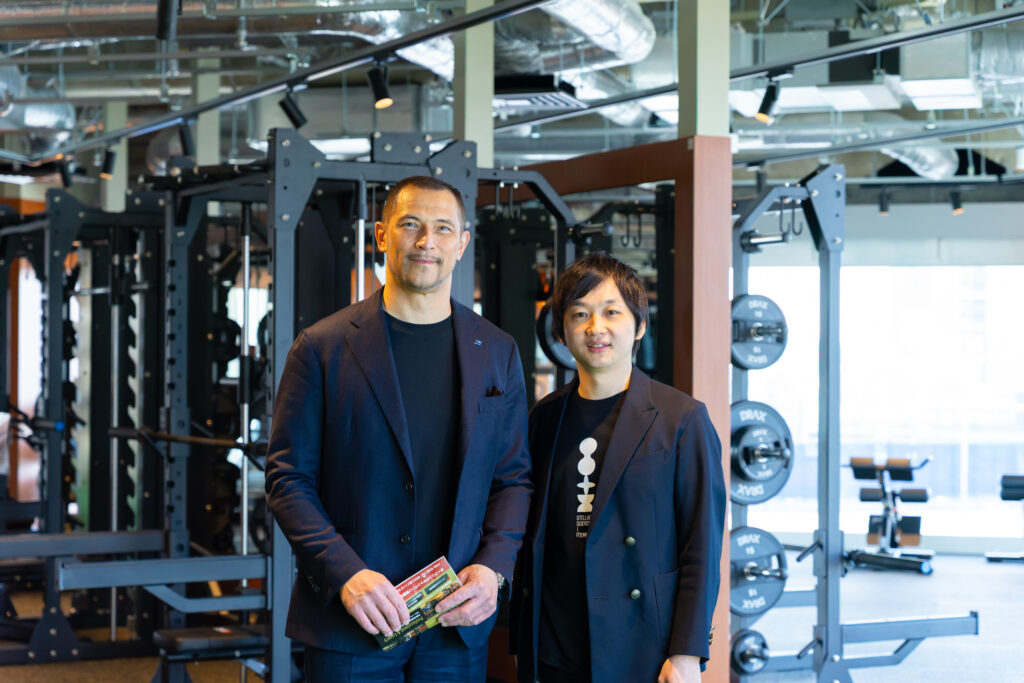
At the YSA Sports and Medical Gym.
Stellar Lab Radio – exploring world-changing research that nobody knows about yet.
Hosted by Takanori Takebe from the Stellar Science Foundation.
See you soon on Stellar Lab Radio.
Stellar Lab Radio — uncovering research that will shape the future.
